

Keerthika Technologies,
2-39/1/B, Beside DENA
Bank, Gowthami Nagar,
Chandanagar, Hyderabad,
India - 500050
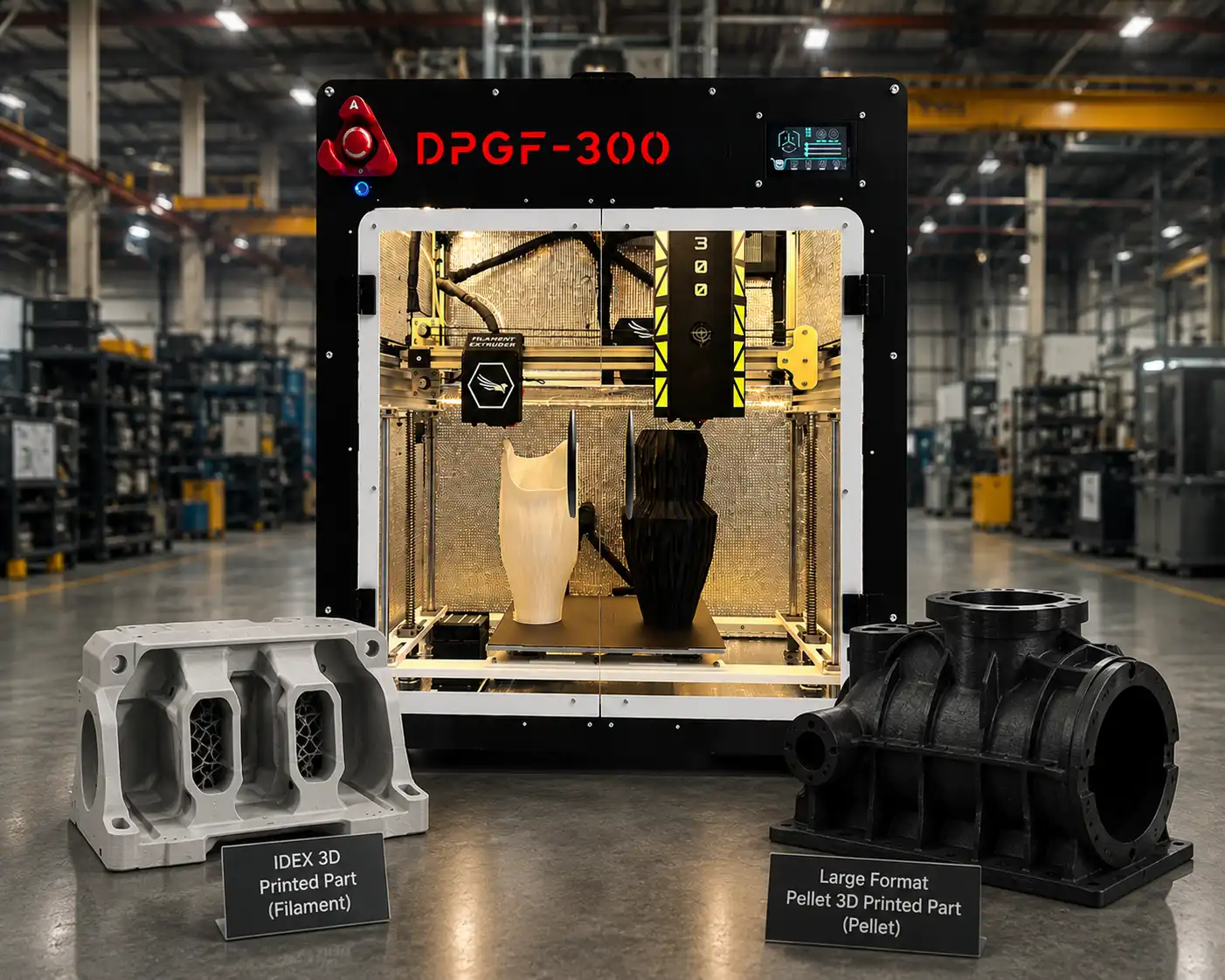
Large format 3D printing and fine detailed 3D printing in one machine. A single IDEX 3D printer with two independent heads — a high-flow pellet extrusion system (FGF) and a precision filament 3D printer (FFF) — each printing its own parts, separately.
The Pellet + Filament IDEX 3D Printer is a dual-extrusion machine that places a pellet extrusion system (FGF) and a filament 3D printer (FFF) on two independent X-carriages inside a single machine.
The pellet head uses screw-based pellet extrusion 3D printing to melt raw thermoplastic granules for fast, low-cost large format 3D printing. The filament head feeds 1.75 mm or 2.85 mm filament through a fine nozzle for precise detail and clean surfaces.
Importantly, the two heads do not mix. Pellet and filament print as completely separate parts — you run a large-format pellet job or a fine-detail filament job. The two material streams never combine in a single print.
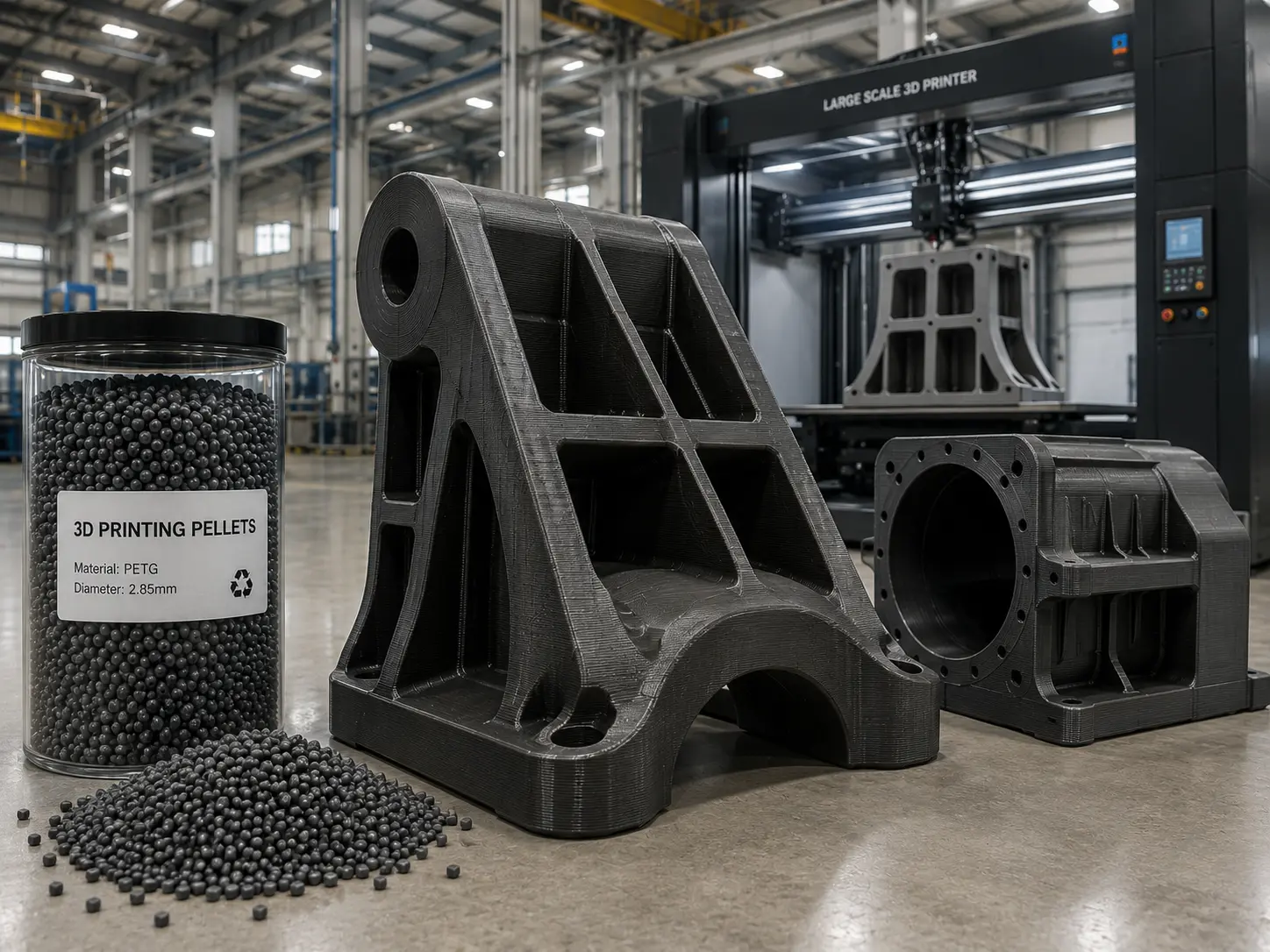
Screw-driven, high-flow deposition for large format 3D printing and low material cost.
Fine-nozzle precision for detailed features, smooth skins and tight tolerances.
Choose either the Pellet Extruder or the Filament Extruder based on your application.
Two heads, two separate workflows. Choose the pellet extrusion system for large format 3D printing, or the filament 3D printer for fine detail. Each head runs standalone and prints its own parts — they are never used together in a single print.

Run the pellet extrusion system for fast, low-cost, large format 3D printing. Pour pellets straight into the hopper and deposit high-flow volume — ideal for tooling, patterns and big prototypes printed as standalone pellet parts.
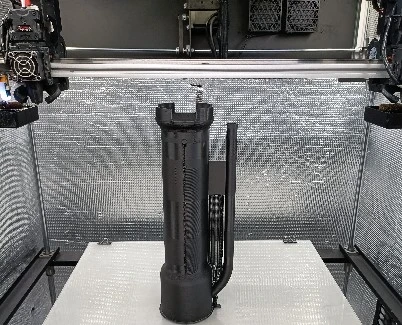
Run the filament 3D printer for fine-detail parts, smooth surfaces and tight tolerances with engineering filaments — the precision workflow of a dedicated FFF 3D printer, printed as standalone filament parts.
The Pellet + Filament IDEX 3D printer carries a pellet extrusion system and a filament 3D printer on two independent X-carriages that share one dual-carriage gantry. The heads do not mix — each prints standalone only, producing its own separate part.
A screw-based pellet extrusion system melts raw thermoplastic granules for high-flow, large format 3D printing. It rides its own X-carriage and prints pellet parts on its own.
A separate filament 3D printer head, in its own box, feeds 1.75 / 2.85 mm filament through a fine nozzle for precise detail. It operates fully independently of the pellet system.
Both heads move independently along the X-axis on a shared gantry — but they never mix or print together. Only one head is active per job; the machine prints standalone only.
A pellet hopper feeds the screw extruder while a dried filament spool feeds the FFF head. Two completely separate material paths — no spooling needed for the pellet side.
Independent X-axis carriage design allows either the pellet extruder or the filament extruder to be selected for printing. This model is designed for single-tool operation, not simultaneous dual-head printing.
Match the job to the head. Reach for the pellet extruder when size, speed and cost lead; reach for the filament extruder when detail and finish lead.
This isn't a compromise between two technologies — it's two complete 3D printers in one machine, each used for exactly what it does best.
A pellet extrusion system and a filament 3D printer in a single IDEX 3D printer — large format and fine detail without buying and maintaining two separate machines.
Raw pellets cost ₹100–300/kg versus ₹800–3,000+/kg for filament. Pellet extrusion 3D printing brings large parts down to commodity resin cost.
The pellet extrusion system scales to big build volumes at high deposition rates — ideal for tooling, patterns, moulds and large standalone prototypes.
Switch to the filament 3D printer whenever a job needs precise features, smooth surfaces and tight tolerances — full FFF precision in the same machine.
Industrial pellets — ABS, ASA, PP, PETG, PPGF, PA-CF and recycled grades — plus the full range of engineering filaments, each loaded into the right extruder.
Each head prints on its own. Run a pellet job, then a filament job — the two systems stay fully separate, with no mixing between material streams.
Each technology has a clear sweet spot. The Pellet + Filament IDEX 3D Printer gives you both capabilities in one machine — choosing the right head for each job, with parts printed separately on each system.
| Capability | Filament FFF | Pellet FGF | Pellet + Filament IDEX 3D Printer |
|---|---|---|---|
| Process | FFF | FGF | Choose the right process for each job |
| Feedstock | 1.75 / 2.85 mm filament | Raw thermoplastic pellets | Choose pellet or filament based on the application |
| Deposition Rate | Low (fine nozzle) | High — up to 500 gms / hr | Choose speed or precision as needed. |
| Material Cost | ₹800–3,000+/kg | ₹100–300/kg | Low-cost pellet printing for large parts; filament for precision applications |
| Detail & Resolution | Excellent — small nozzles | Coarser — large nozzles | High-resolution printing available when required |
| Large-Format | Costly & slow at scale | Native large-format capability | Large-format capability using the pellet extrusion system |
| Machine Investment | Buy one machine | Buy one machine | One machine instead of two |
| Floor Space | One machine | One machine | Single installation |
| Machine Utilization | Limited to one process | Limited to one process | Switch between two processes |
| Best For | Detailed functional parts | Large tooling, patterns, moulds | Large industrial parts or high-detail functional components |
Feed industrial pellets to the pellet extrusion system and engineering filaments to the filament 3D printer. Each grade is loaded into the extruder that suits it — not every material runs in both.
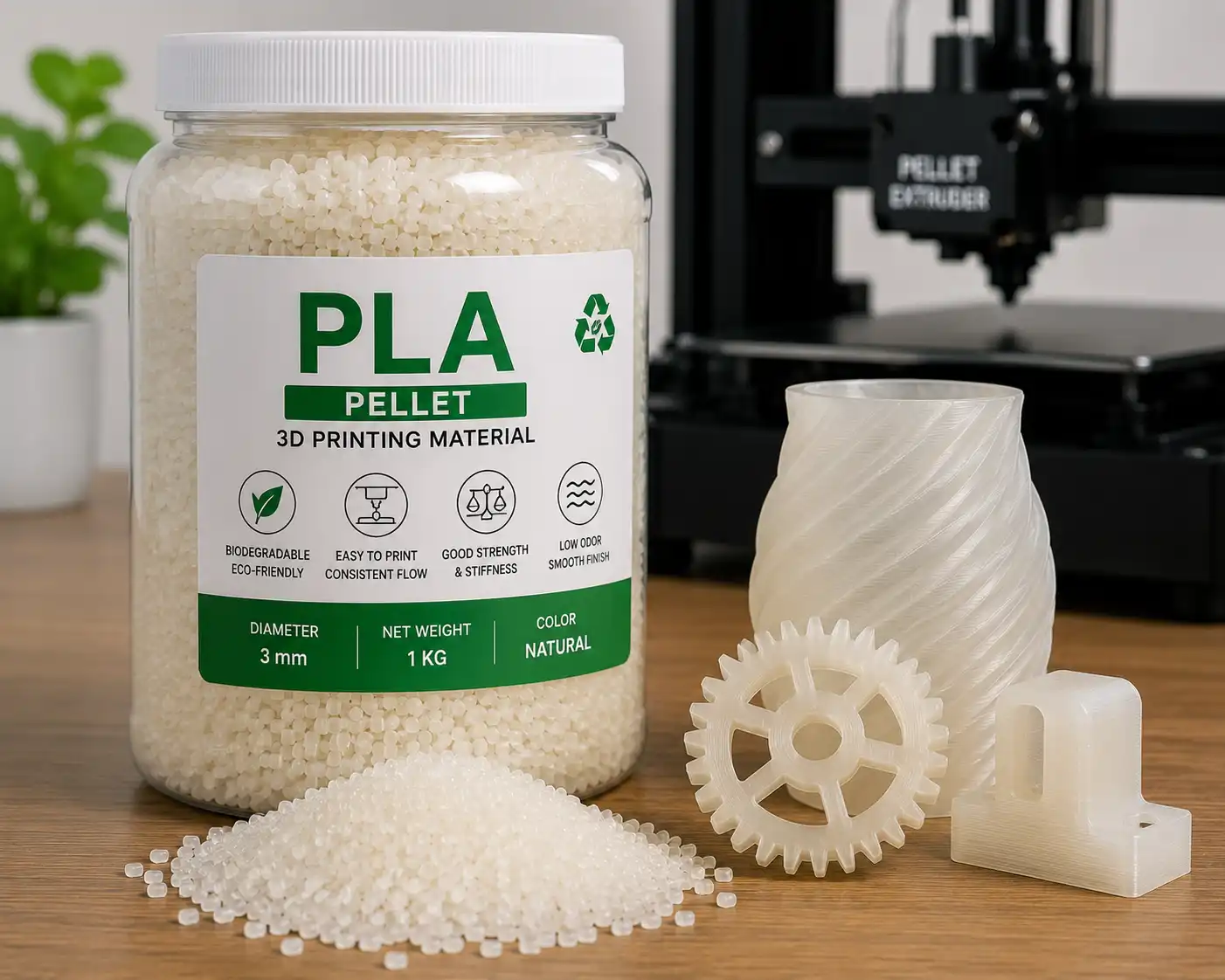
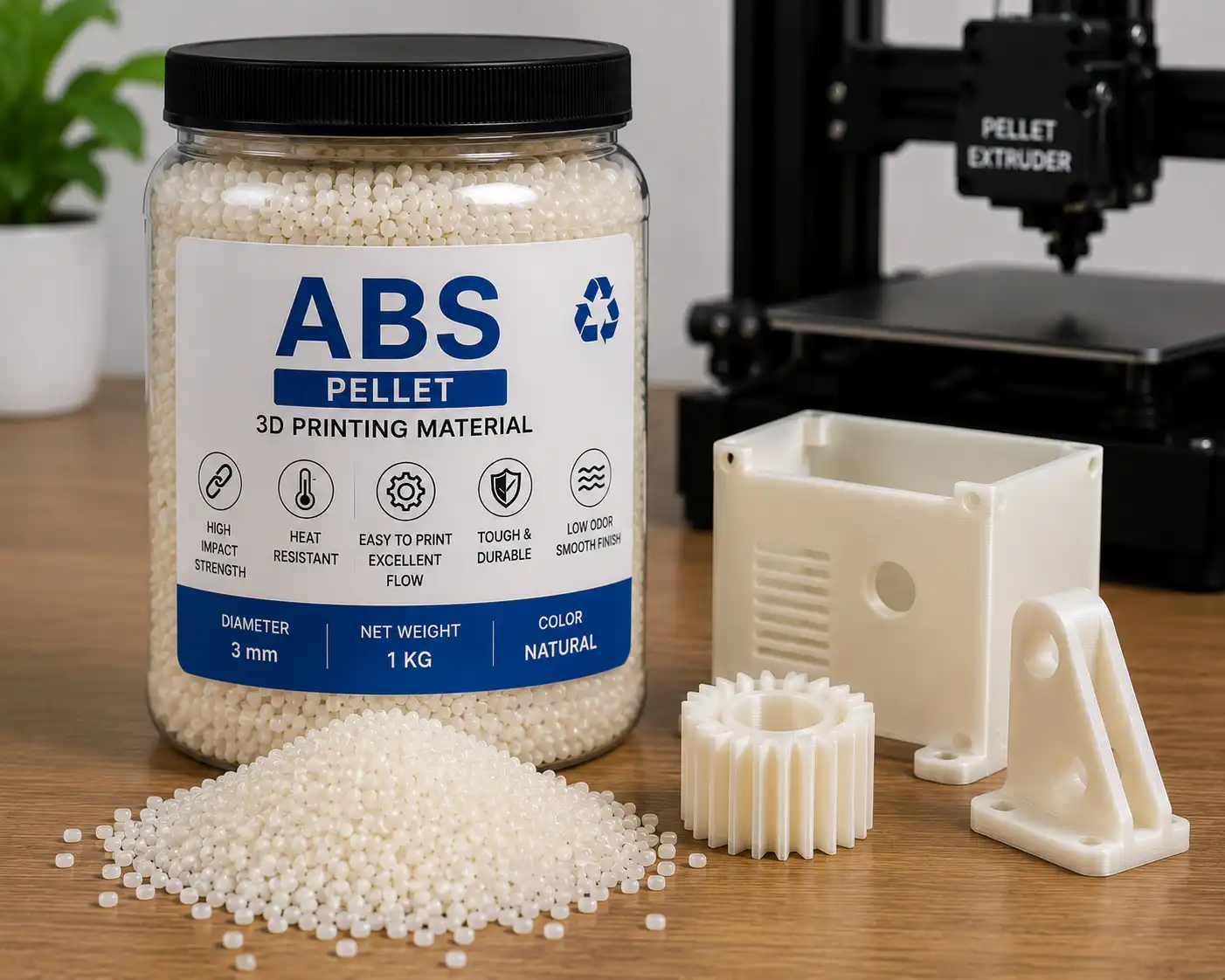
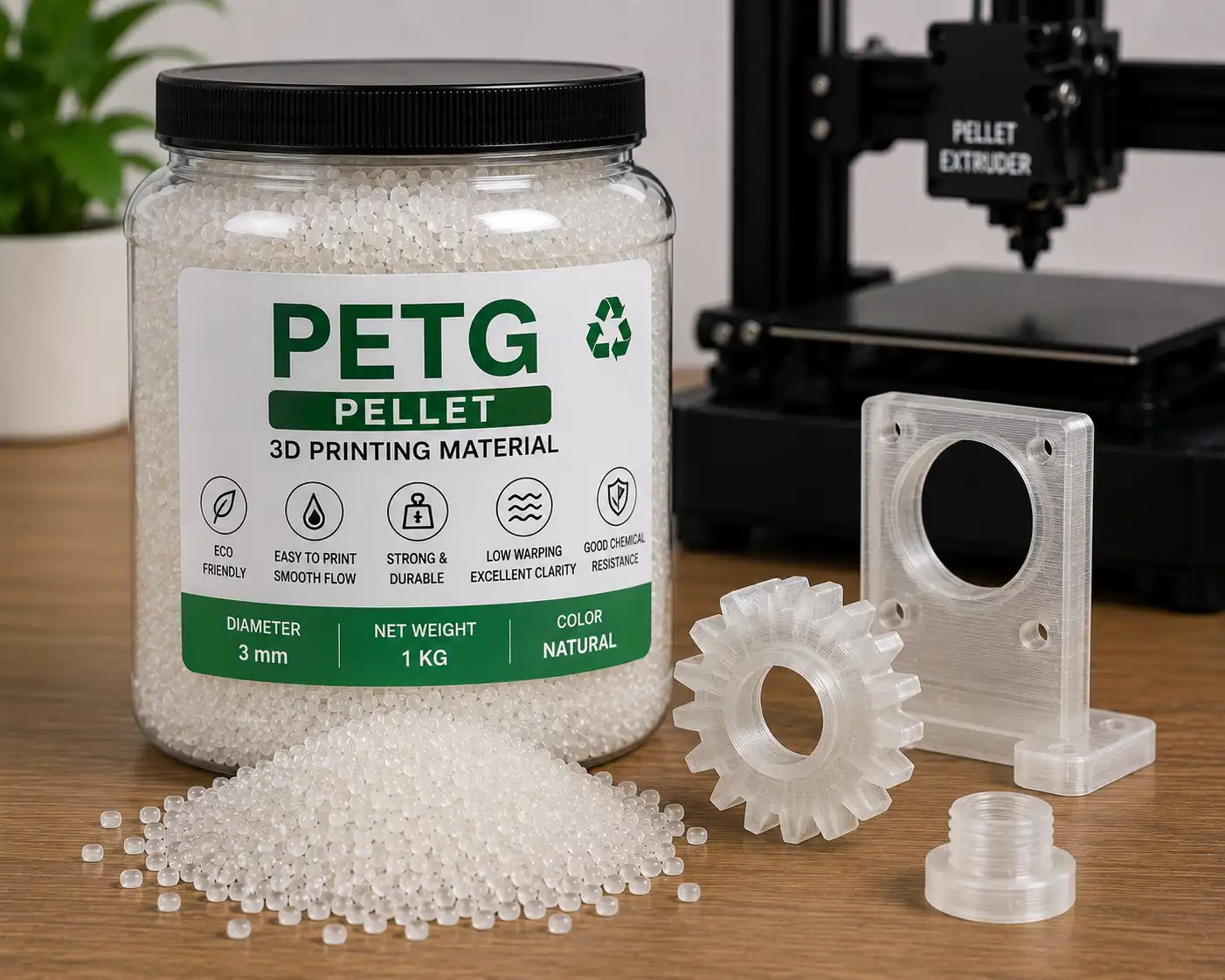
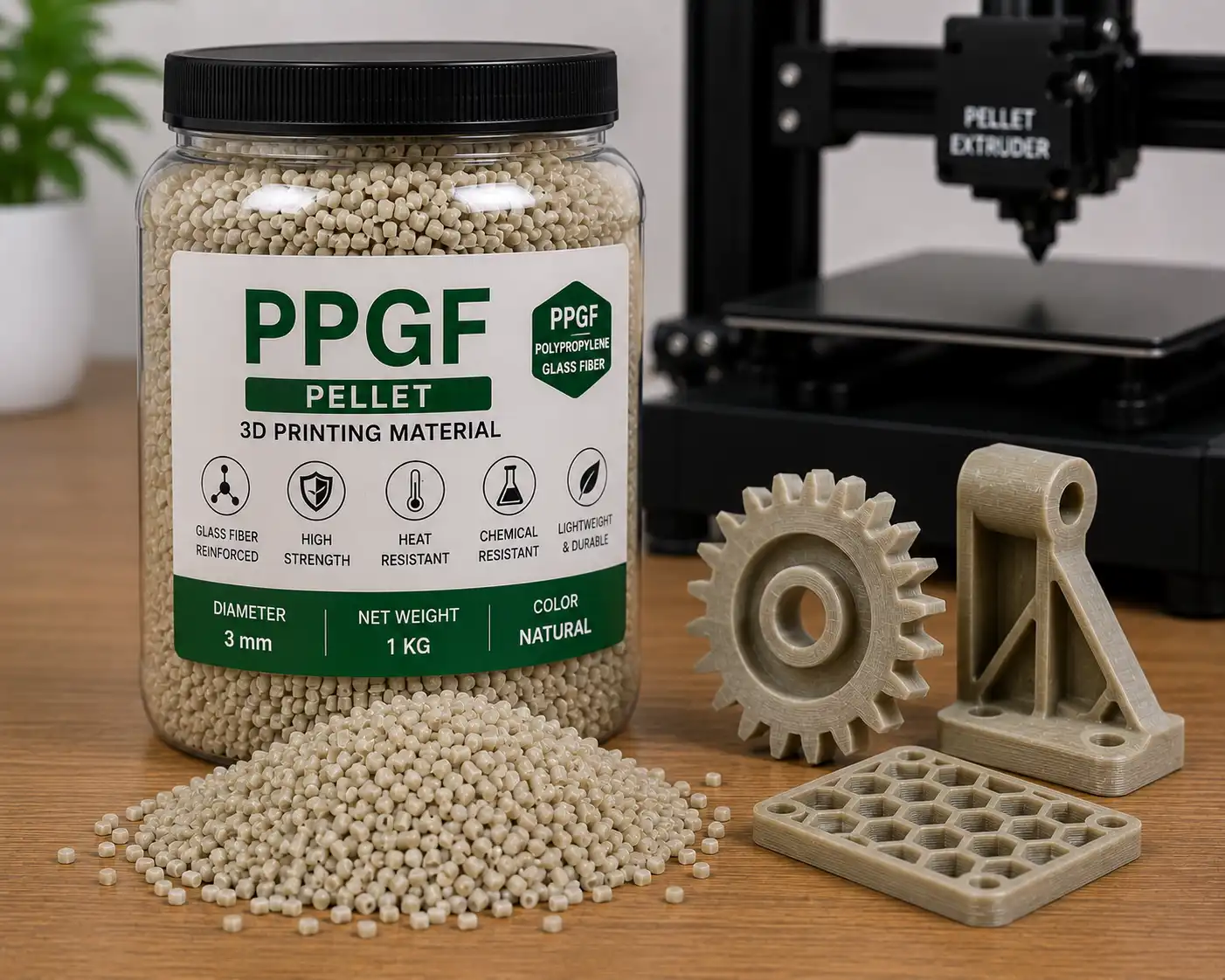
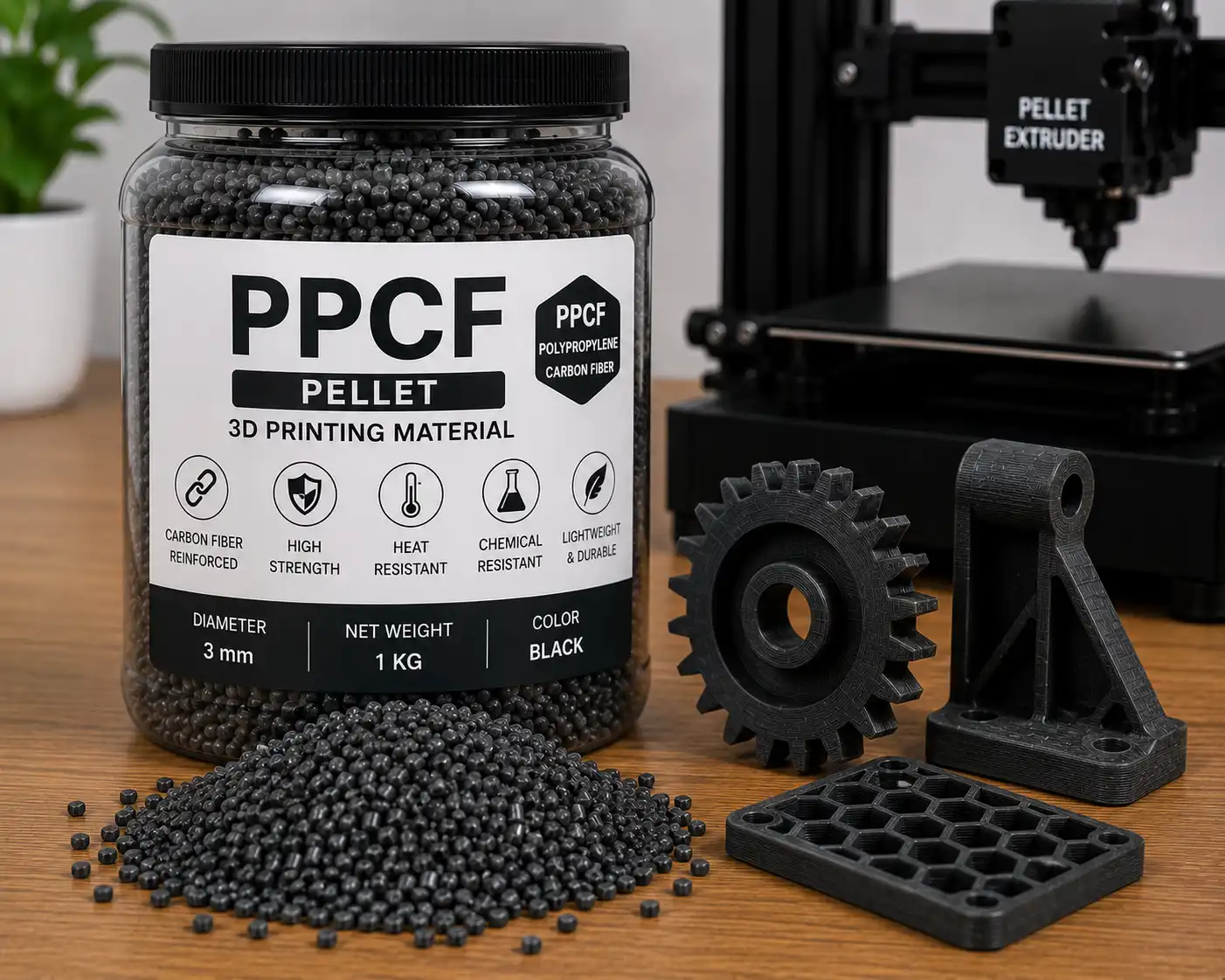
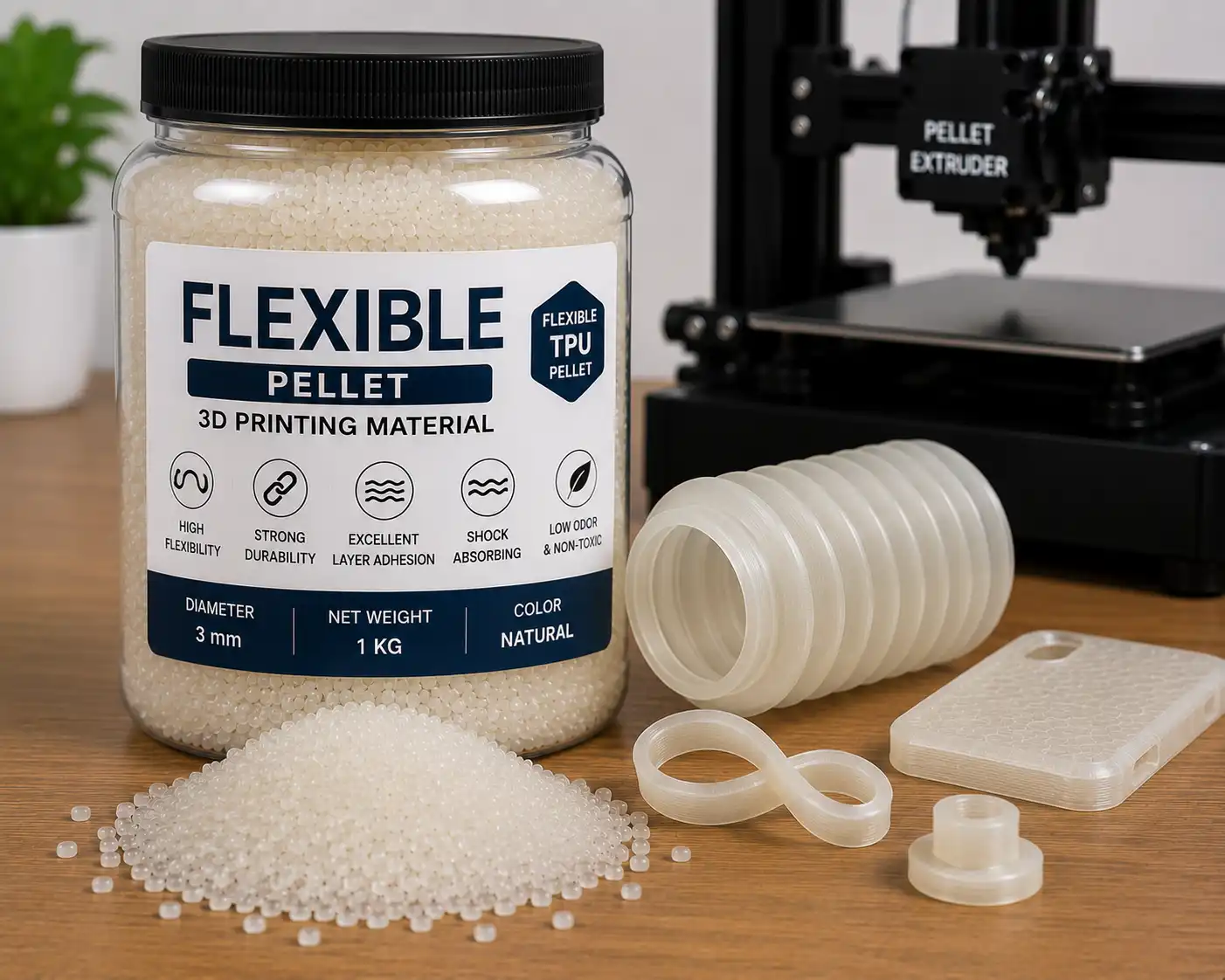
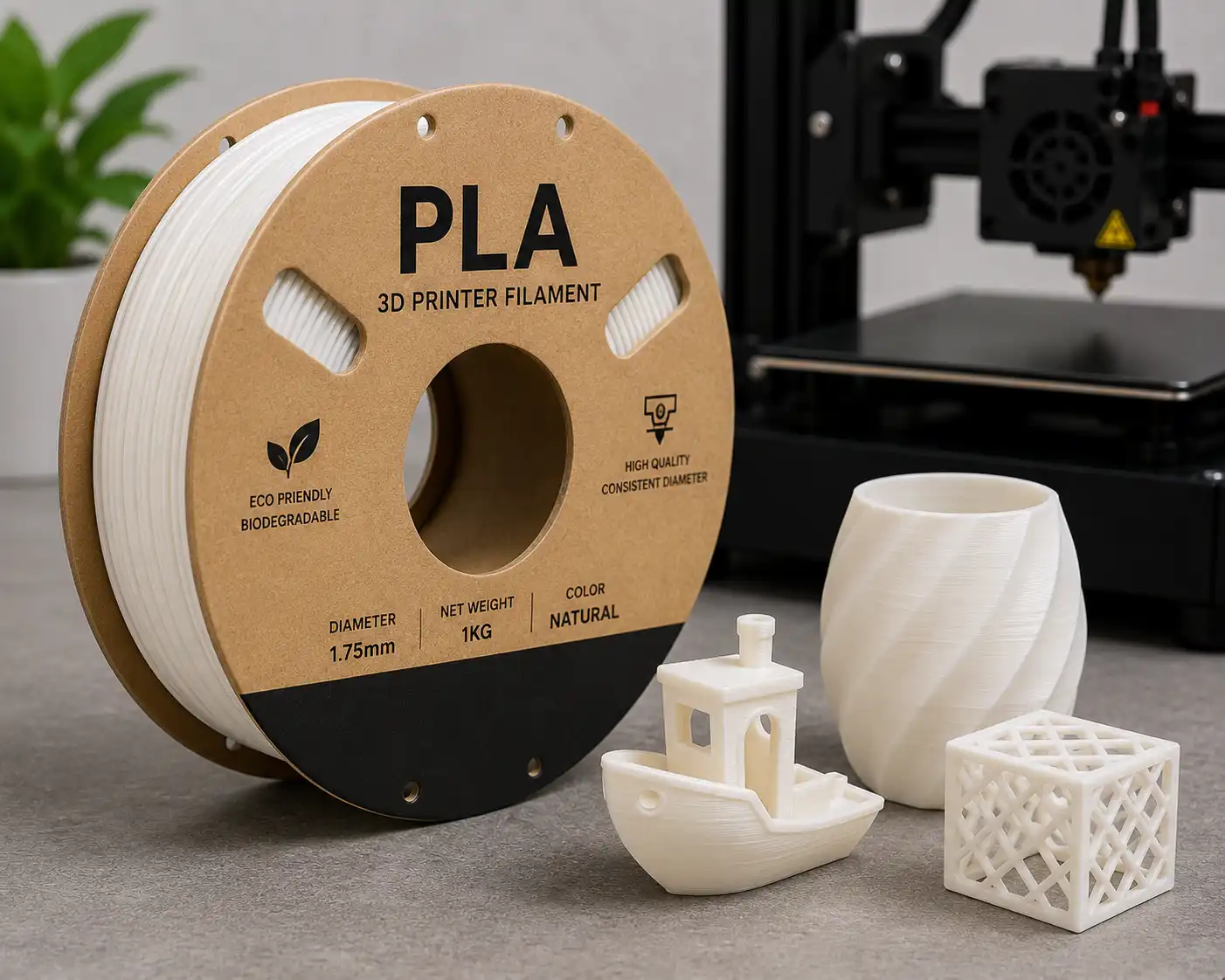
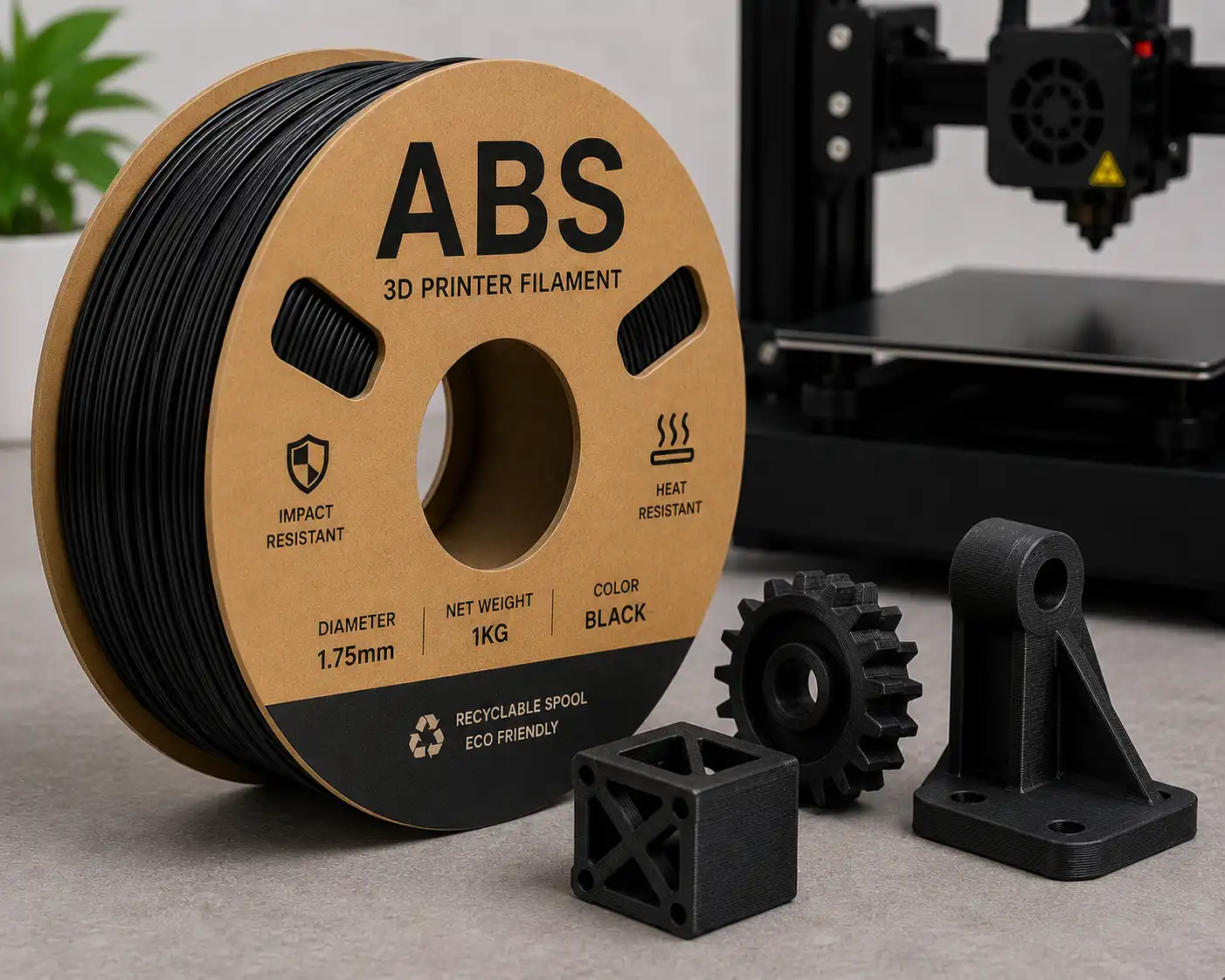
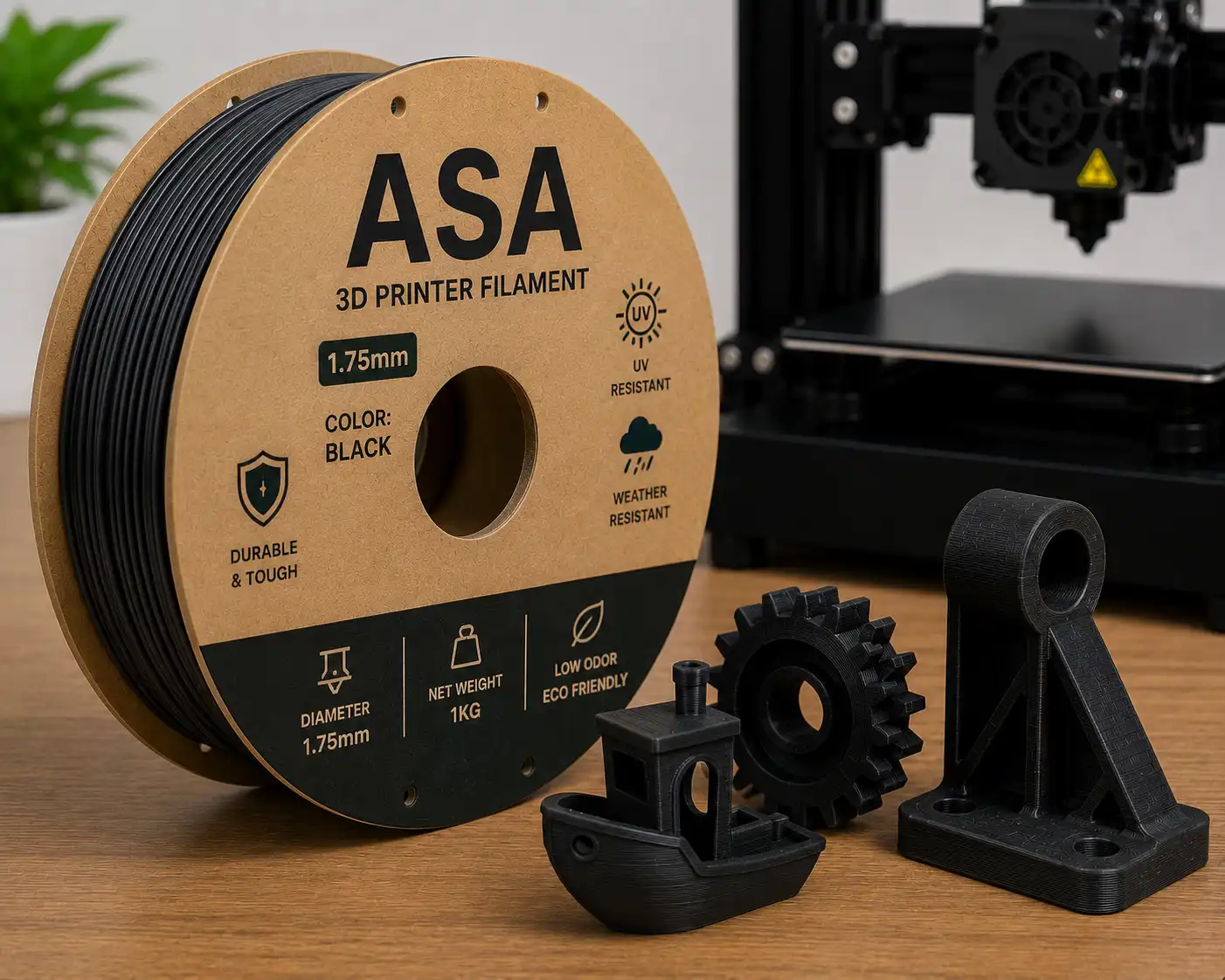
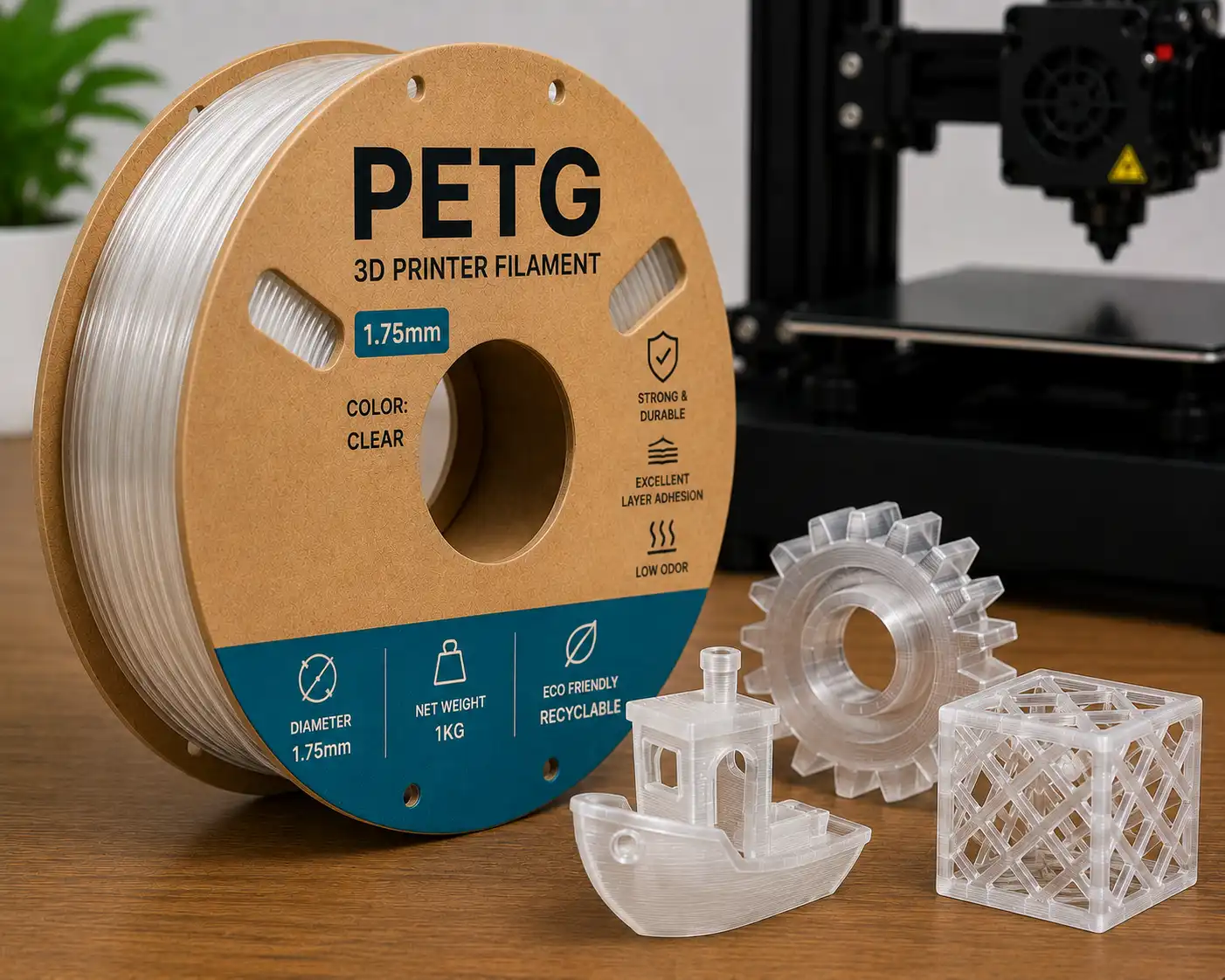
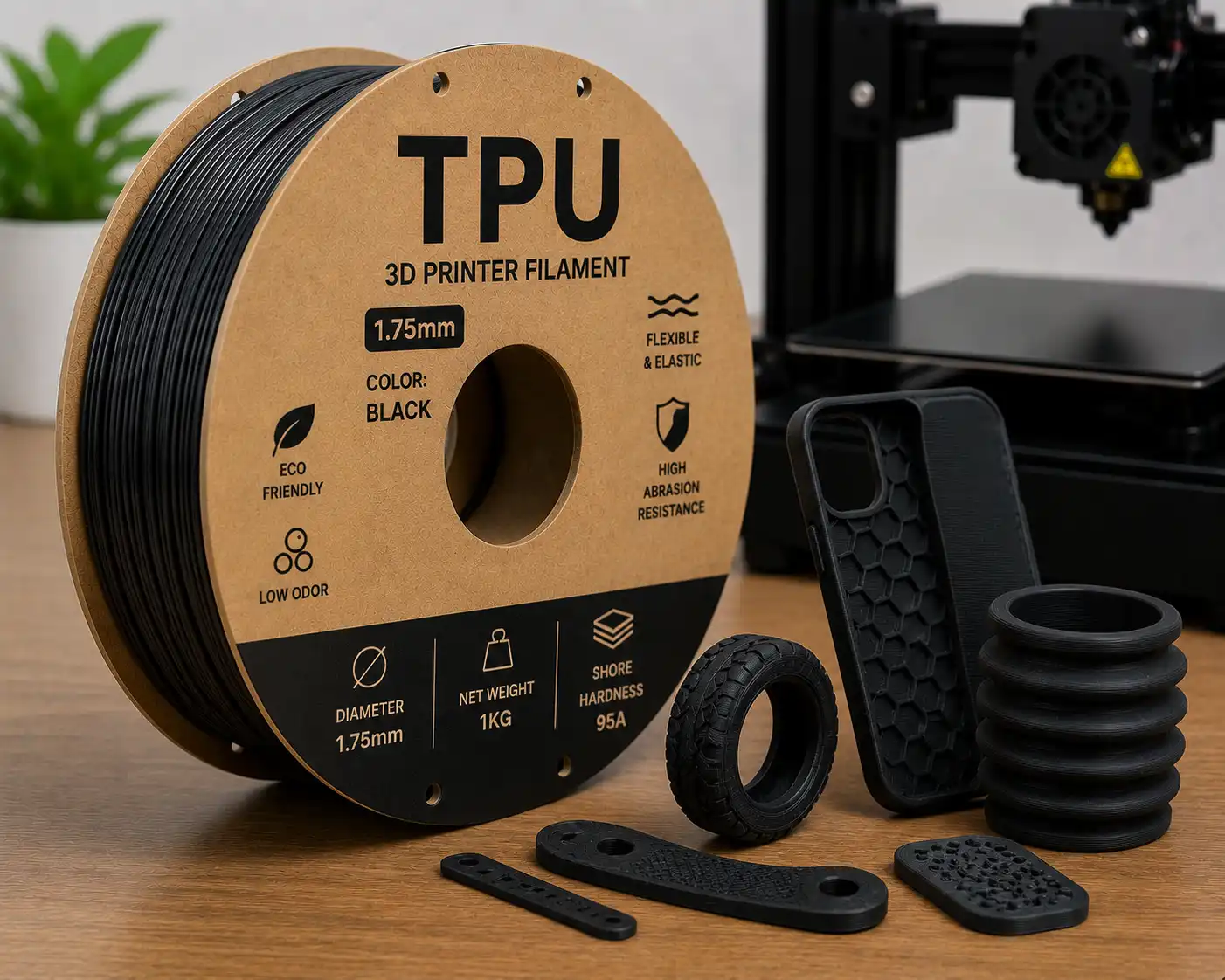
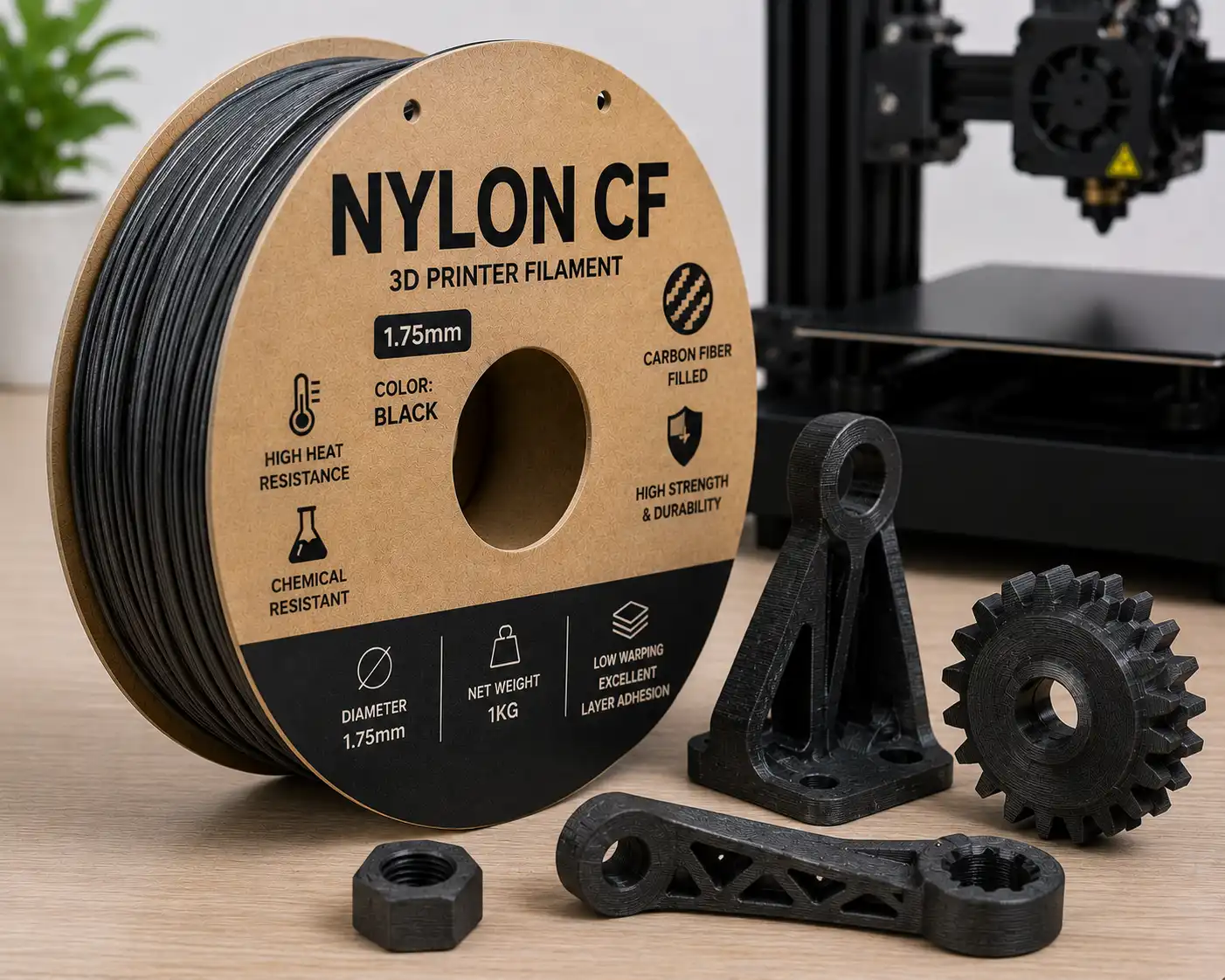
* Some materials perform better as filament and others as pellet. Not every material can be used in both extruders — each grade is run in the system it suits.
Use the pellet extrusion system for large, low-cost parts and the filament 3D printer for detailed precision parts. Each application runs on the head that suits it — printed as a standalone part.
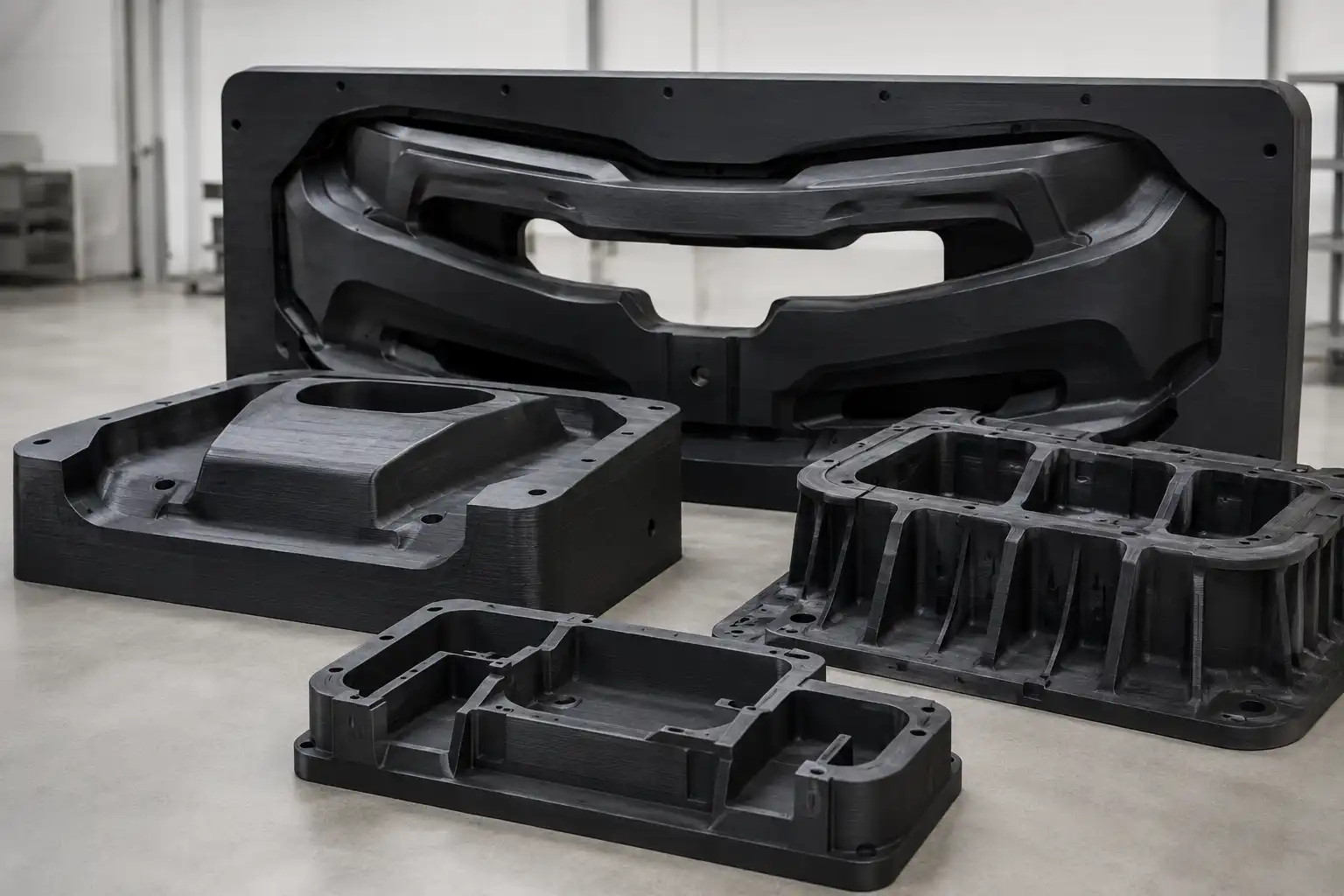
Print big layup tools, vacuum-forming bucks and patterns as standalone pellet parts, with large format 3D printing at low material cost.
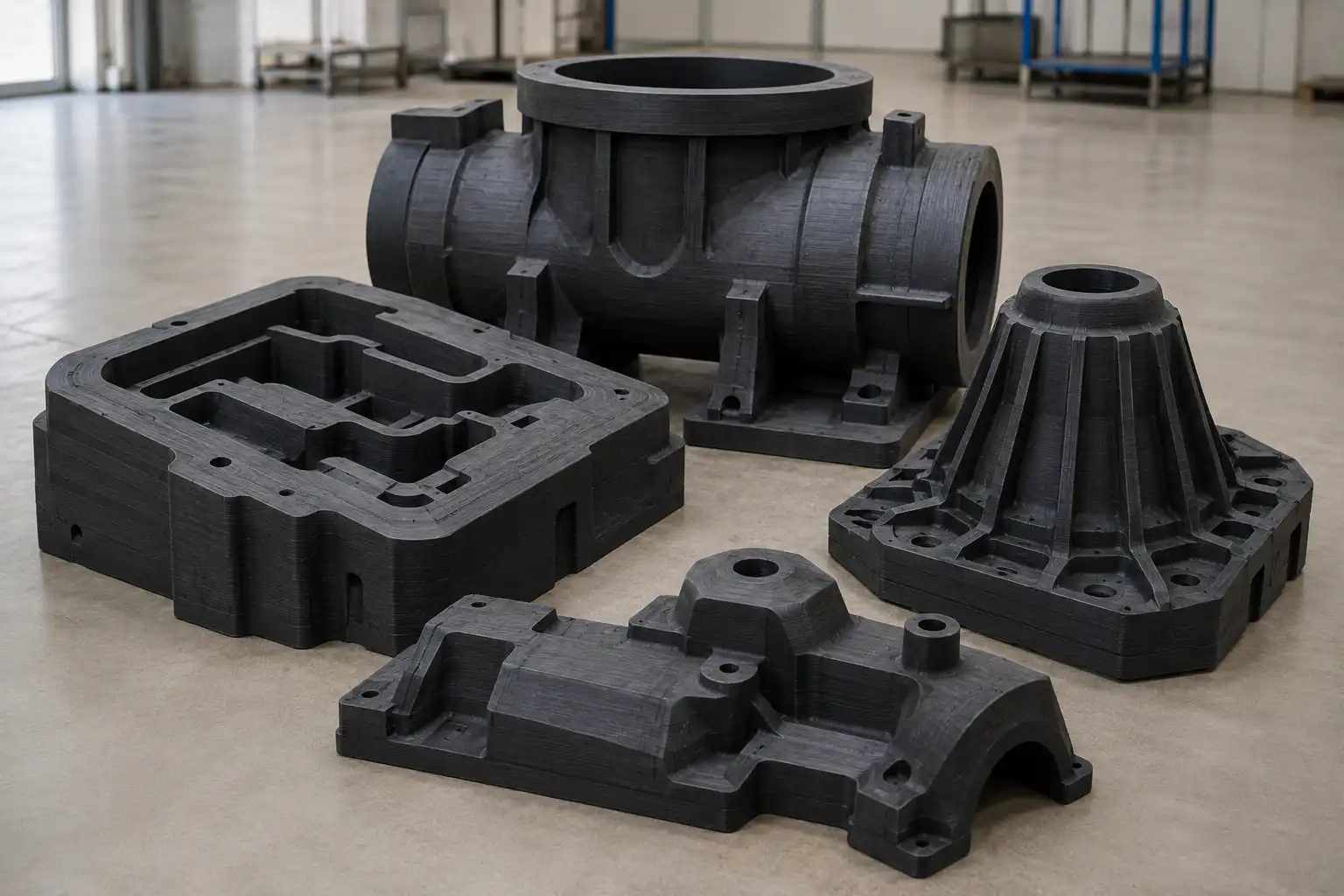
Produce dimensionally accurate sand-casting patterns in ABS or ASA pellets at a fraction of traditional pattern-making cost.
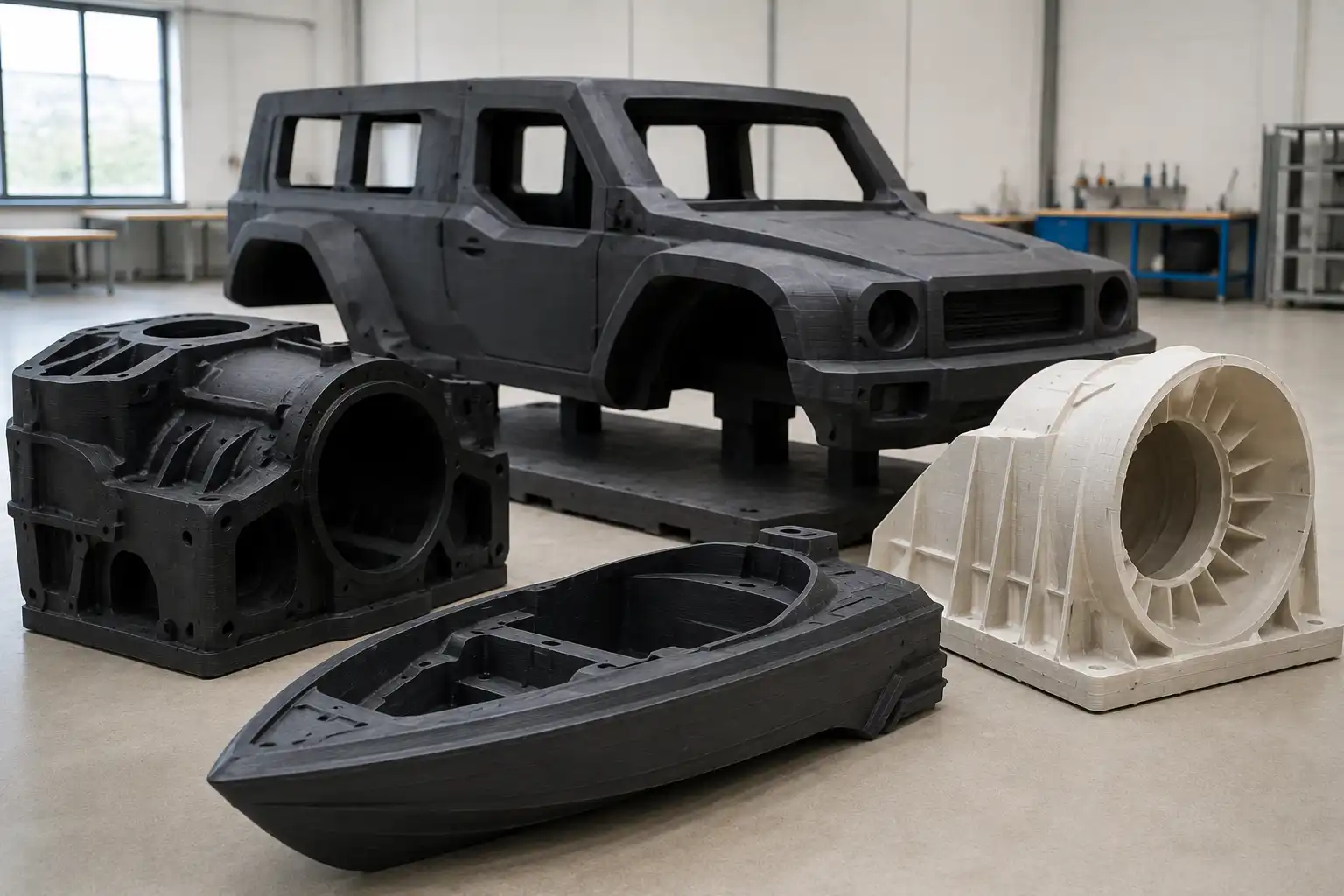
Build full-scale panels, architectural and massing models economically using the pellet extrusion system's high deposition rate.
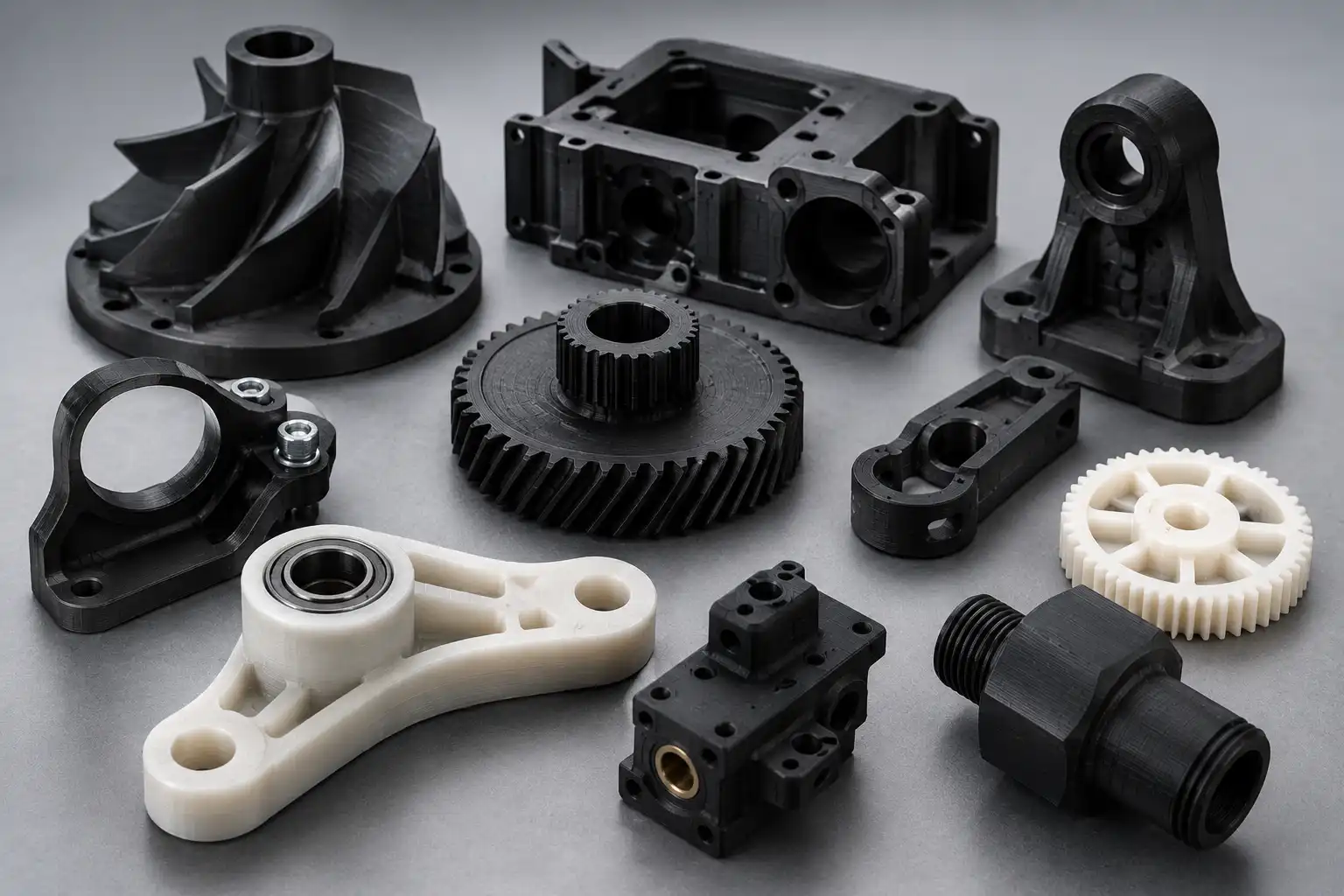
Print detailed end-use parts, brackets and housings on the filament 3D printer with smooth surfaces and tight tolerances.
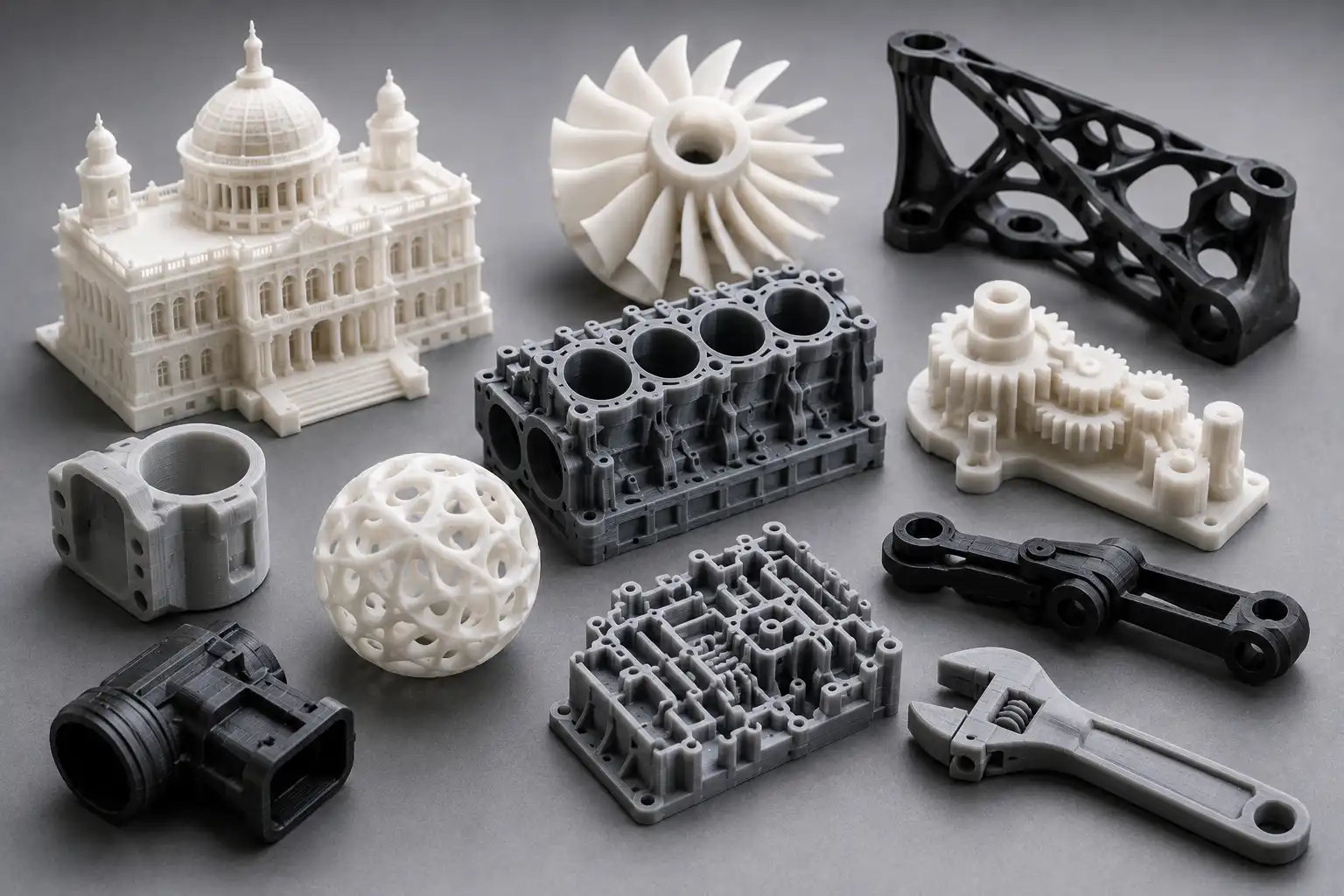
Create concept models and detailed prototypes with crisp features and clean finishes, straight from the FFF head.
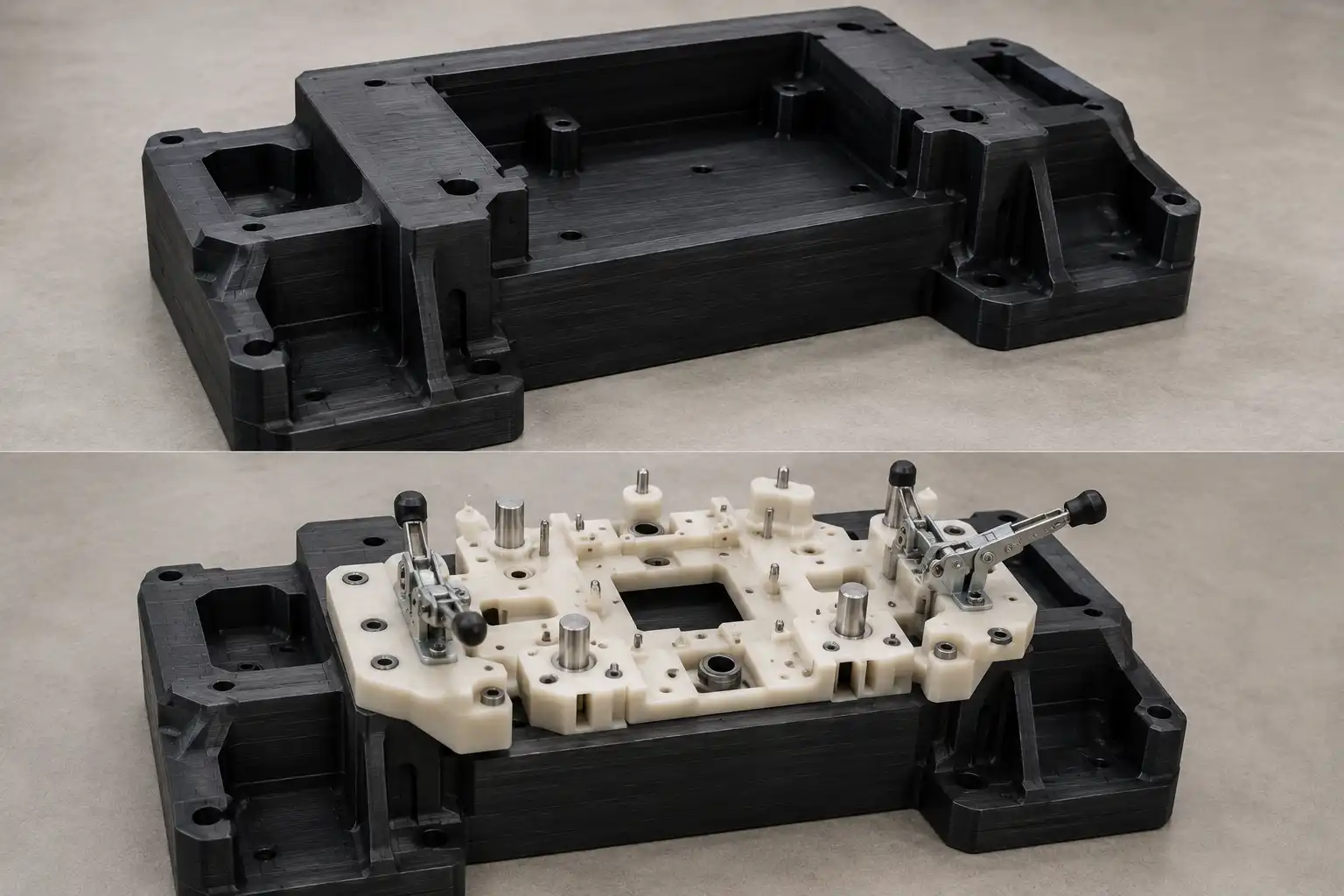
Print bulky fixture bodies on the pellet system and precise locating fixtures on the filament head — each as a separate part, on the head that fits.
A Pellet + Filament 3D Printer is an industrial 3D printer equipped with two independent extrusion systems: a pellet extrusion (FGF) head for large-format printing and a filament (FFF) head for precision printing. You simply choose the appropriate print head based on your application, and each system prints independently.
No. This machine is not designed to combine pellet and filament extrusion in a single print. Each print job uses either the pellet extrusion system or the filament extrusion system, depending on the requirements of the part.
The IDEX (Independent Dual Extruder) architecture allows both extrusion systems to be installed on separate X-carriages within one machine. This provides the flexibility to switch between pellet printing and filament printing without purchasing two separate printers.
The pellet extrusion system is ideal for producing large parts, tooling, moulds, foundry patterns, manufacturing aids, and large functional prototypes where fast printing speed and low material cost are important.
The filament extrusion system is best suited for precision components, detailed prototypes, functional engineering parts, and applications requiring smooth surface finish, fine features, and tighter dimensional accuracy.
The pellet extrusion system supports industrial pellet materials such as ABS, PETG, glass-filled polymers, carbon-fiber reinforced materials. The filament system supports common engineering filaments including PLA, ABS, PETG, TPU, PC, CF-Nylon, and many other compatible FFF materials.
Yes. The pellet extrusion system is specifically designed for high-deposition-rate, large-format 3D printing, making it suitable for manufacturing large prototypes, tooling, moulds, fixtures, and production aids while significantly reducing material costs.
Having both pellet and filament extrusion systems in a single machine provides greater flexibility. Users can print large, economical parts using pellets and switch to filament whenever higher accuracy, finer detail, or better surface quality is required — all without needing two separate printers.
This machine is ideal for manufacturers, research institutions, automotive companies, aerospace organizations, foundries, educational institutions, product development teams, and industrial R&D departments that require both large-format production capability and precision FFF printing in one platform.
Talk to the Garuda3D team about the Pellet + Filament 3D printer — a pellet extrusion system and a filament 3D printer in a single machine, built for your production.

