

Keerthika Technologies,
2-39/1/B, Beside DENA
Bank, Gowthami Nagar,
Chandanagar, Hyderabad,
India - 500050
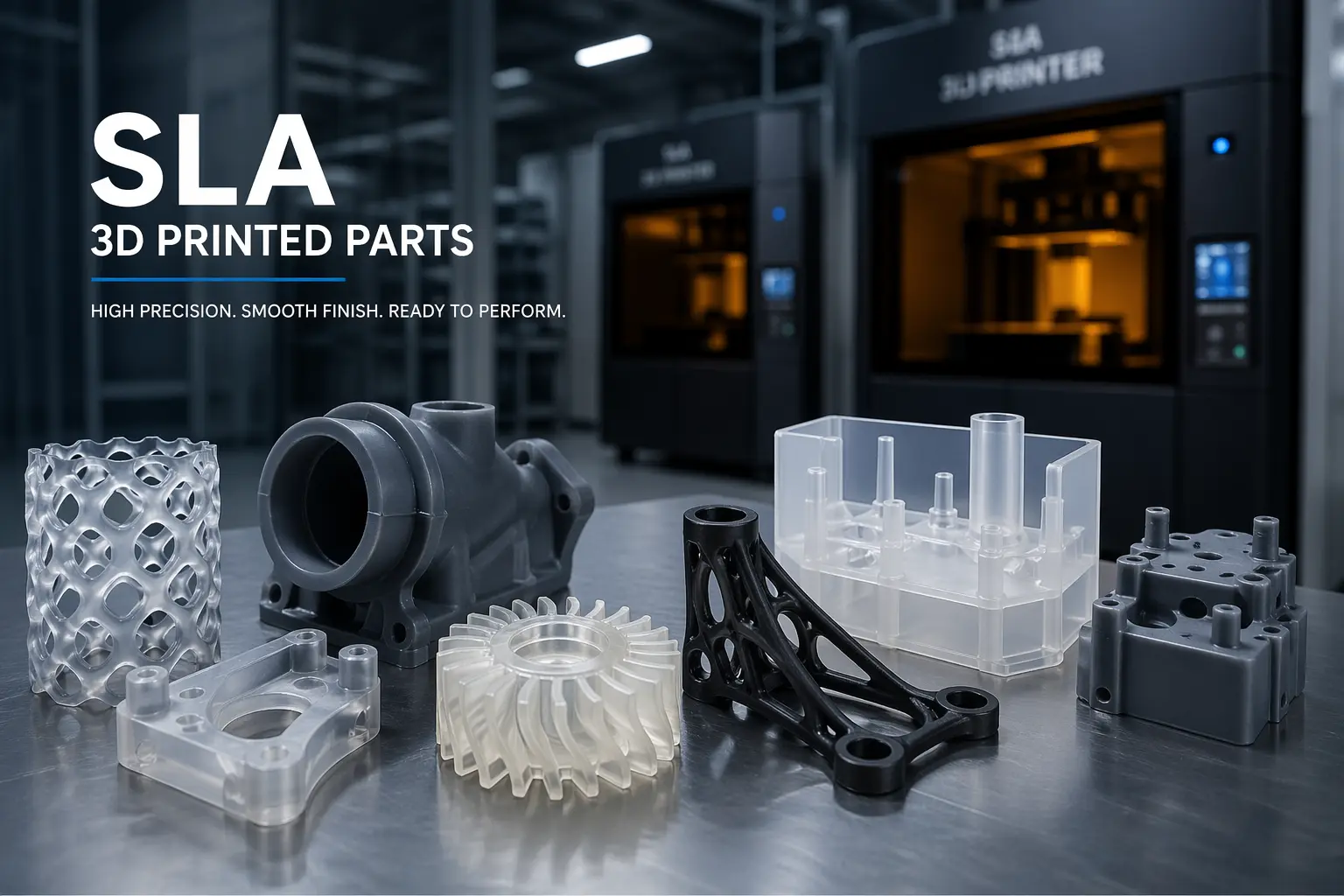
Stereolithography — the gold standard for high-precision resin printing. Ultra-fine layer resolution, flawless surface finish, and watertight parts for the most demanding engineering applications.
MAX BUILD AREA
LAYER RESOLUTION
LEAD TIME

Photopolymer resin solidified by a precise UV laser beam.

Layer thickness as fine as 25 microns for intricate detail.

Airtight and watertight geometries for sealing applications.

Standard, Tough, Flexible, Castable & Biocompatible.
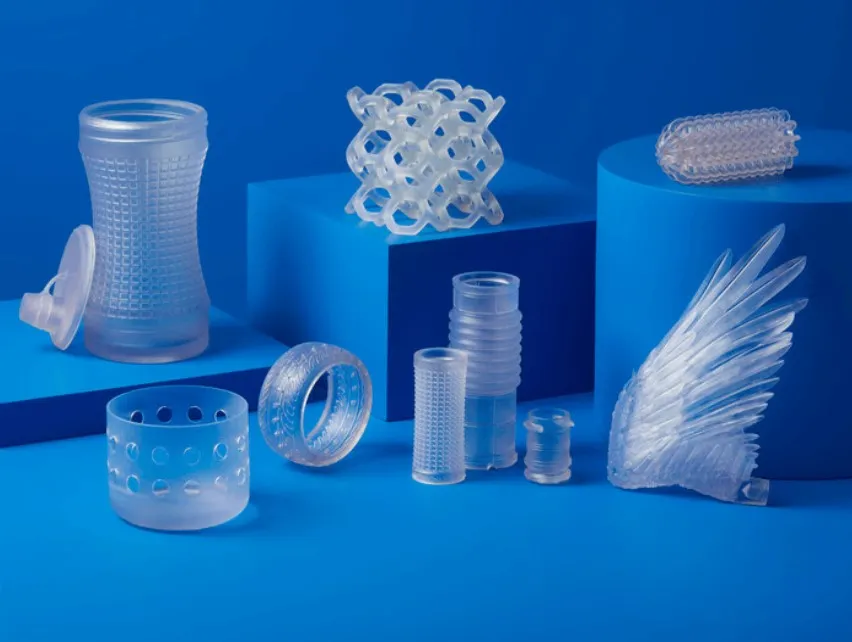
Stereolithography (SLA) is one of the oldest and most precise additive manufacturing technologies. It uses a UV laser to selectively cure liquid photopolymer resin layer by layer.
SLA parts are widely used in dental, medical, jewellery, engineering, and product development industries due to their excellent dimensional accuracy and smooth surface finish.
Upload STL, OBJ, STEP, or 3MF files for print preparation.
Choose Standard, Tough, Flexible, Castable, or Biocompatible resin.
Precision UV laser cures every layer with ultra-fine detail.
IPA wash and UV curing ensure strength and dimensional stability.
Sanding, paint finishing, and shipping across India.
Understanding where each technology excels helps you make the right choice for your application.
Full technical specification of Garuda3D's SLA printing service. All values are for standard resin unless stated.
Available in White and Grey as standard. Custom colours and specialty resins available on request.
General-purpose photopolymer for prototypes, display models, and design validation.
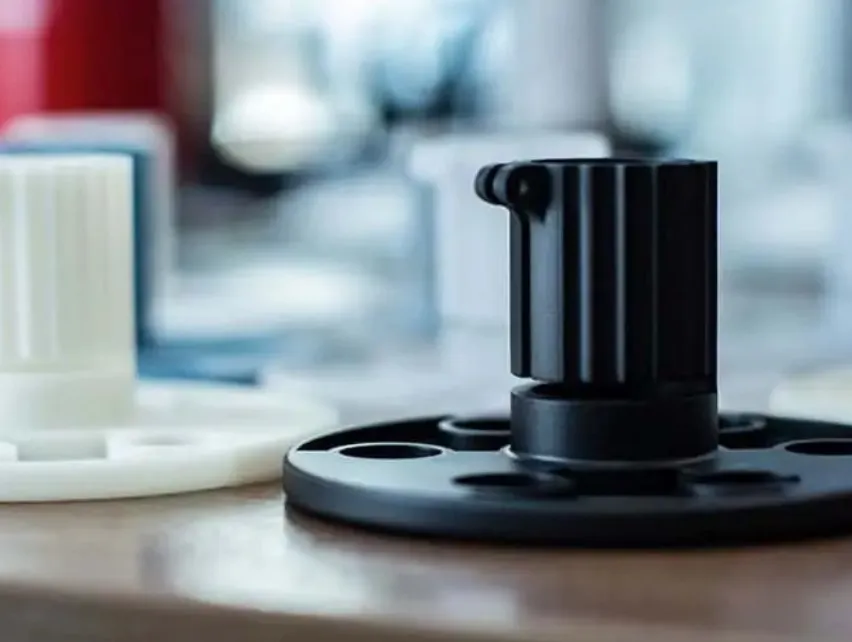
Simulates ABS thermoplastic properties for functional engineering parts.
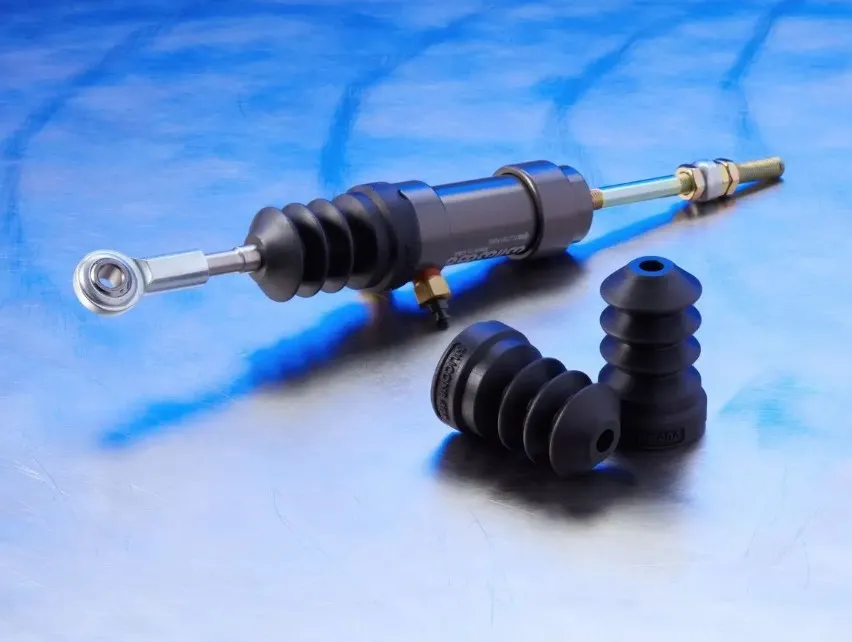
Rubber-like resin for gaskets, grips, and wearable prototypes.
Zero ash burnout resin designed for jewellery and dental casting.
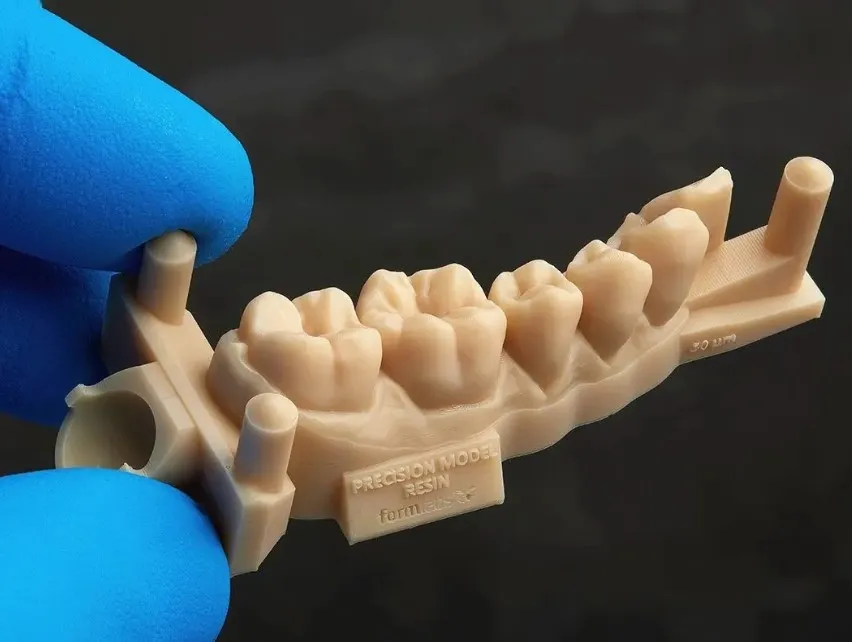
ISO certified resin suitable for medical and dental applications.
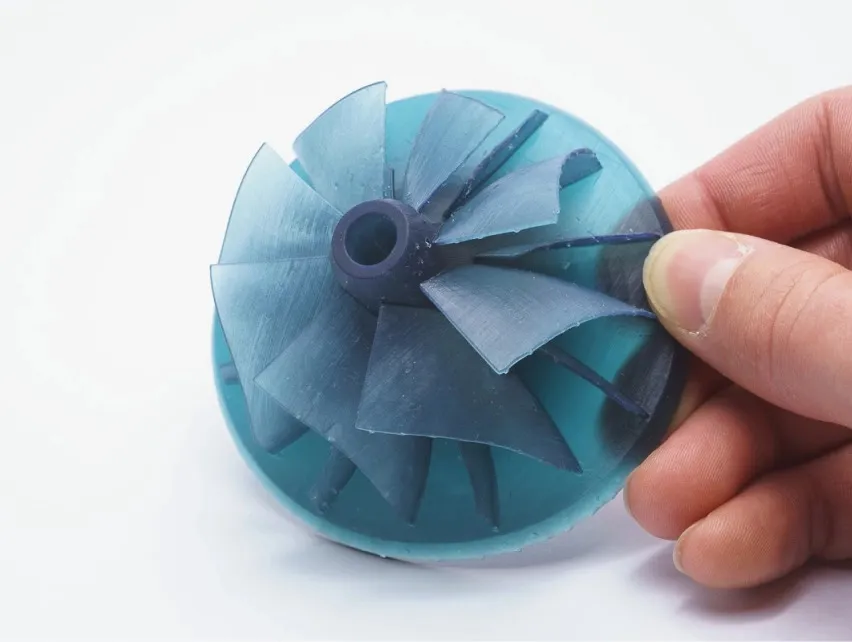
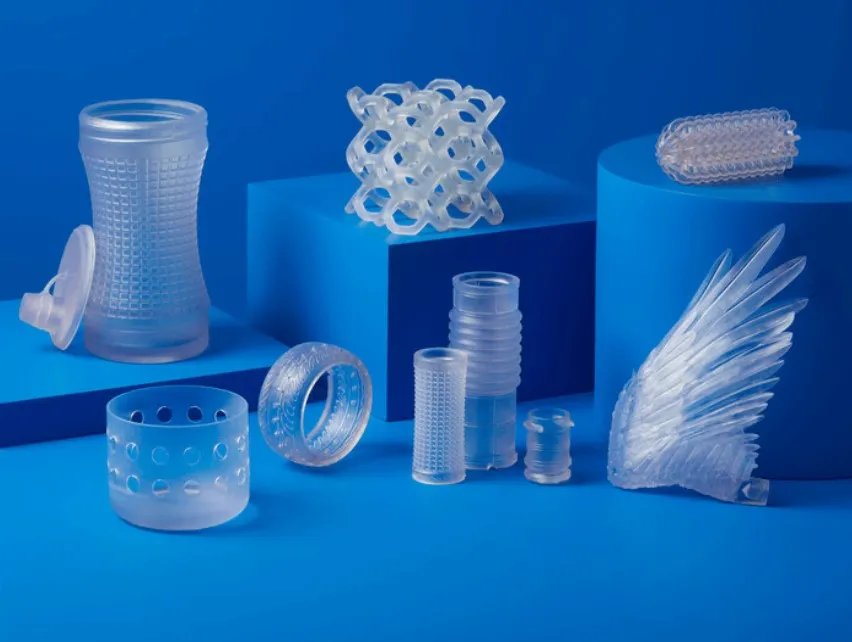
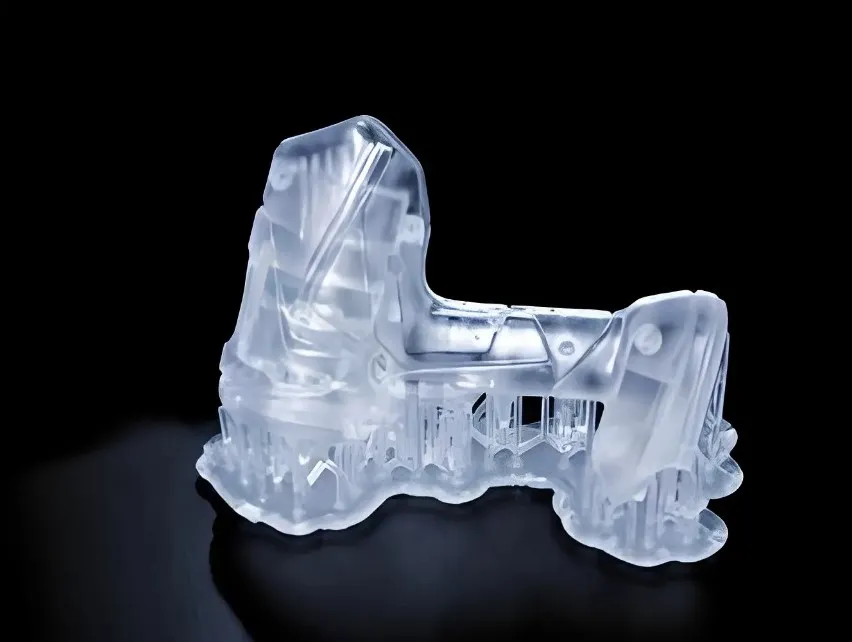
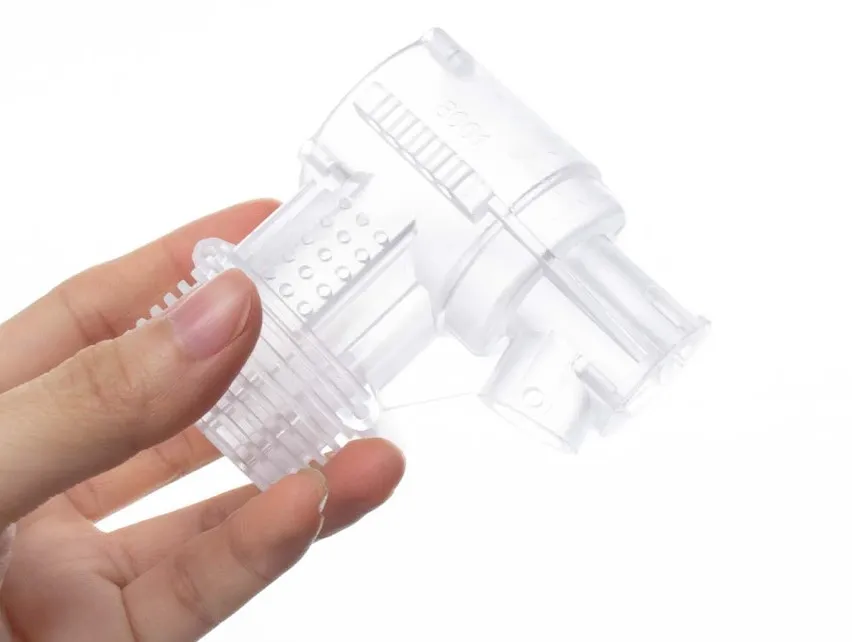
Transparent resin for high-clarity prototypes, display models and functional applications.

SLA technology uses precision lasers to create highly detailed and accurate parts.

Different resin materials are available for diverse mechanical and aesthetic applications.

SLA printing produces smooth surfaces and intricate fine details with exceptional clarity.

Thin layer curing results in superior surface finish with less visible layer marks.

Intelligent software automatically creates supports for complex geometries and overhangs.
SLA delivers where other technologies fall short — in precision, surface quality, and material versatility.
Layer resolutions as fine as 25 µm enable intricate features that FFF cannot replicate.
Minimal layer visibility provides near injection-moulded surface quality directly from the printer.
Standard, Tough, Flexible, Castable, Transparent, and Biocompatible material support.
Continuous resin curing creates fully sealed parts without porosity or leakage paths.
Perfect for thin walls, intricate geometries, miniature details, and internal structures.
Ultra-thin layers fuse seamlessly for a clean, premium appearance with minimal finishing.
Every SLA print requires IPA washing and UV post-curing for full strength. Beyond that, Garuda3D offers complete professional finishing services for production-ready parts.
Our finishing team provides sanding, priming, matte coatings, gloss coatings, metallic finishes, and custom colour matching.
Choose the right level of post-processing for your application and timeline.
IPA wash and UV curing with support marks visible. Fastest turnaround option.
Support marks removed and surface prepared for painting or presentation.
Matte or gloss paint coating in your required custom colour.
Chrome, bronze, gold and premium metallic finishing effects.
SLA 3D printing is trusted across the most precision-demanding industries worldwide.

High-fidelity product prototypes with injection-moulded surface quality.

Surgical guides, dental models, splints, and biocompatible applications.

Ultra-fine castable resin masters for investment casting applications.

Functional assemblies, housings, snap-fits, and precision components.

Sub-millimetre detailing for figurines, scale models, and collectibles.
Answers to the most frequently asked questions about our SLA 3D printing service.
SLA uses liquid photopolymer resins that are cured by a UV laser. We offer Standard, Tough (ABS-like), Flexible (rubber-like), Castable (for jewellery investment casting), Biocompatible (ISO 10993), and Clear/Transparent resin grades. Each resin is optimized for specific mechanical and functional requirements.
SLA printers can achieve layer resolutions as fine as 25 microns (µm) — approximately 4× finer than standard FFF printers. X-Y accuracy is ± 0.1 mm. This makes SLA the preferred choice for parts requiring fine surface detail, tight tolerances, and smooth finishes.
Yes — post-processing is mandatory for all SLA prints.
Parts must be:
1. Washed in Isopropyl Alcohol (IPA)
to remove uncured resin
2. Exposed to a UV post-cure station
to achieve full material strength and stability
Without these steps, parts remain sticky, under-strength,
and dimensionally unstable. Garuda3D handles all mandatory
post-processing as part of every SLA order.
Standard SLA resin is stiff with excellent detail,
but more brittle than FFF thermoplastics.
For applications requiring impact resistance,
we recommend Tough / ABS-like resin,
which provides significantly better elongation
and impact strength.
For flexible parts, we offer rubber-like resin
with up to 160% elongation at break.
Yes. Our complete post-processing services include:
Sanding — surface prep to remove any layer lines
Priming — creates a uniform base for painting
Paint Finishing — Matte, Gloss, Metallic,
or Custom RAL/Pantone colours
Clear Coating — UV-resistant protective top coat
Turnaround for finishing is typically
2–5 additional business days.
Standard: 3–7 business days
Express: 1–3 business days
(additional fee)
Rush: Under 24 hours
(custom quote required)
Lead times include mandatory IPA wash
and UV post-cure.
Paint finishing requires additional time.
Confirmed timelines are provided after file review.
We accept STL, OBJ, STEP, AMF,
and 3MF.
For CAD formats (SolidWorks, CATIA, Fusion 360),
we offer conversion services.
Wall thickness should be a minimum of
1 mm for SLA; thinner walls may require
design reinforcement.
Choose SLA when:
you need fine surface detail (25 µm layers),
tight tolerances (± 0.1 mm), watertight parts,
optical clarity, or dental/medical biocompatibility.
Choose FFF when:
you need large build volume, engineering thermoplastics
(ABS, Nylon, PC), or lower cost with acceptable surface quality.
Choose SLS when:
you need production-grade Nylon parts without supports,
high throughput, or isotropic mechanical properties.

