
Keerthika Technologies,
2-39/1/B, Beside DENA
Bank, Gowthami Nagar,
Chandanagar, Hyderabad,
India - 500050
Selective Laser Sintering — industrial-grade powder bed fusion for strong, support-free, isotropic Nylon parts. Production-ready components for the most demanding engineering environments.
Max Build Area
Layer Resolution
Lead Time
Unsintered powder supports all geometry — zero support waste
Equal mechanical properties in all three axes, unlike FFF
Nest multiple parts in one build — maximise cost efficiency
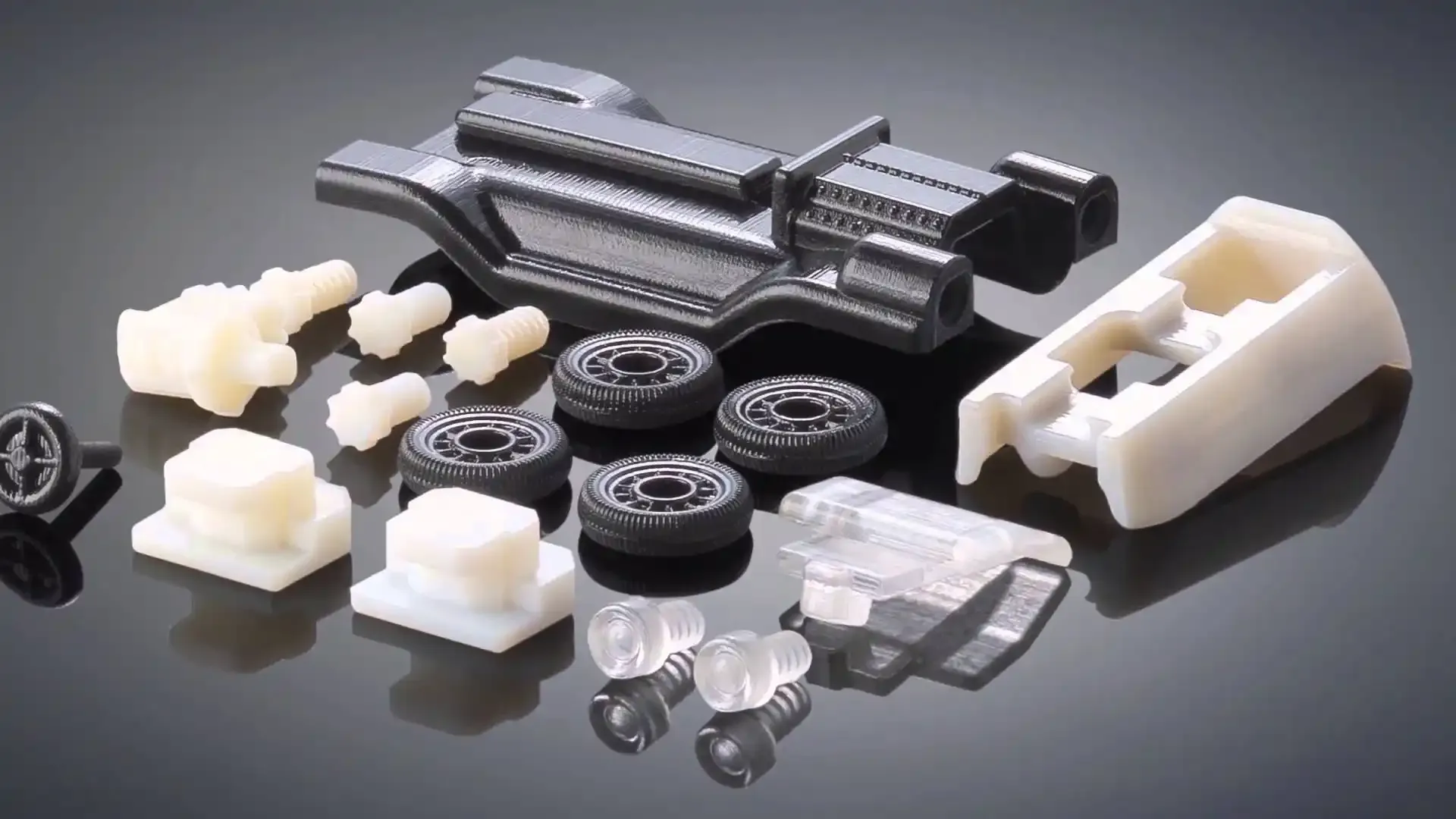
High-performance engineering polymers for end-use parts
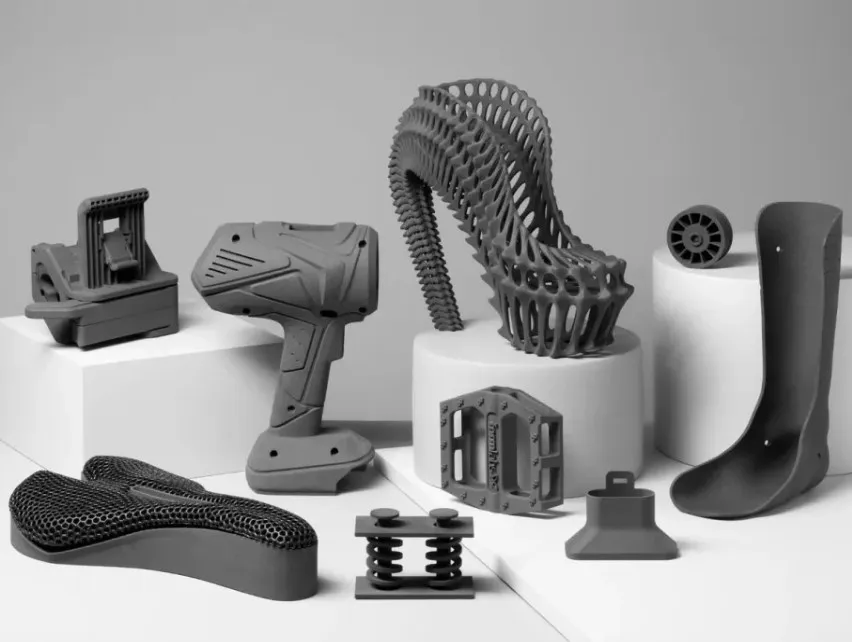
Selective Laser Sintering (SLS) is a powder bed fusion additive manufacturing technology that uses a high-powered CO₂ laser to sinter polymer powder particles layer by layer into solid 3D objects.
A high-powered laser fuses polymer powder particles into solid, production-grade parts — no liquid resin, no filament, no supports.
Upload STL, OBJ, or STEP. Our team slices the model and nests parts in the build volume for maximum efficiency and cost savings.
The build chamber is filled with PA11 or PA12 nylon powder. The powder bed is pre-heated to just below the material melting point.
A CO₂ laser scans each cross-section, fusing powder particles together. The build platform descends layer by layer while fresh powder is rolled over.
The completed build cake cools in a controlled environment for 12–24 hours. Controlled cooling prevents warping and dimensional inaccuracy.
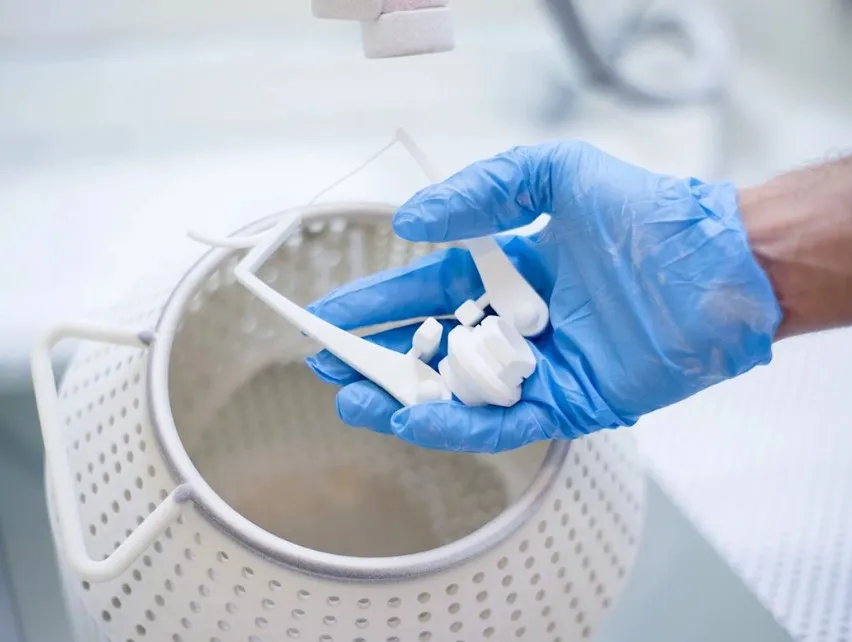
Parts are excavated from the powder cake and bead-blasted to remove residual powder. Optional dyeing or painting is then applied.
Both PA11 and PA12 available. Output colour is White. Dyeing and painting available on request.
PA12 is the most widely used SLS material worldwide. It offers an excellent balance of mechanical strength, chemical resistance, and dimensional stability. PA12 produces rigid, functional parts suitable for a vast range of industrial and consumer applications.
PA11 is derived from castor oil — a bio-based, more sustainable alternative to PA12. It offers greater ductility, impact resistance, and elongation at break, making it the preferred choice for flexible functional parts, sportswear, and prosthetics.
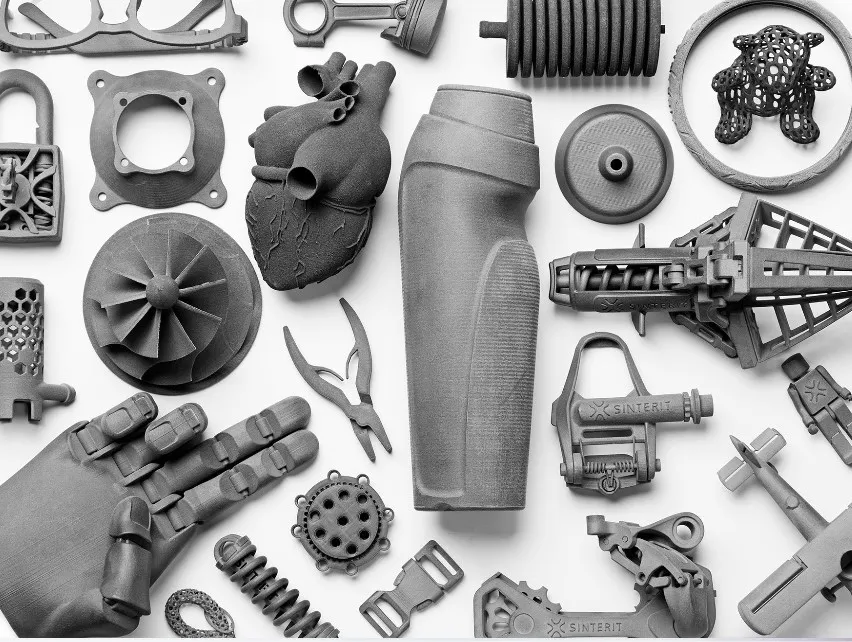
SLS unlocks capabilities no other polymer printing technology can match — combining production-grade strength with unrestricted design freedom.
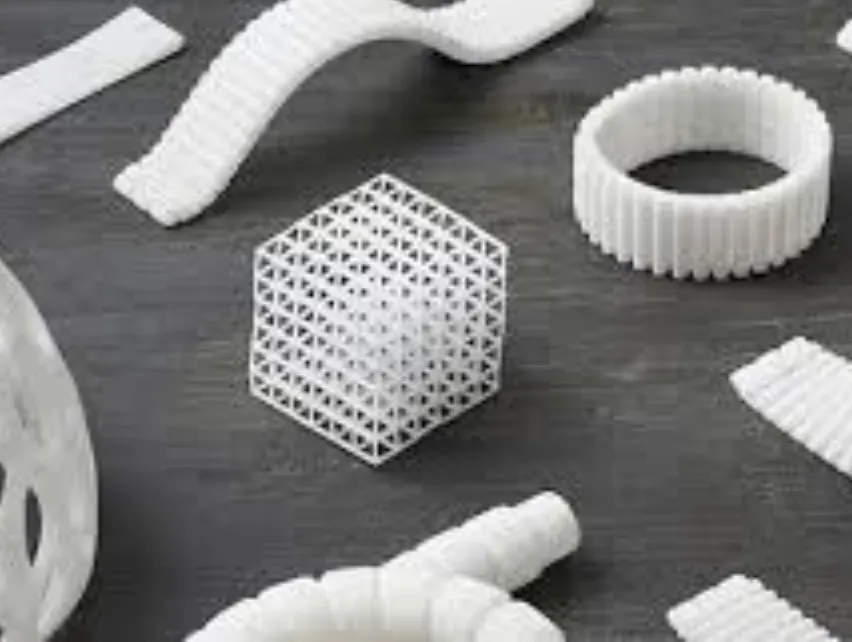
The unsintered powder surrounding every layer provides complete support — enabling complex undercuts, internal channels, living hinges, and interlocking mechanisms without any support removal.
Unlike FFF, SLS parts have essentially equal strength in X, Y, and Z axes. Parts can be loaded in any direction without risk of delamination — critical for functional and structural applications.
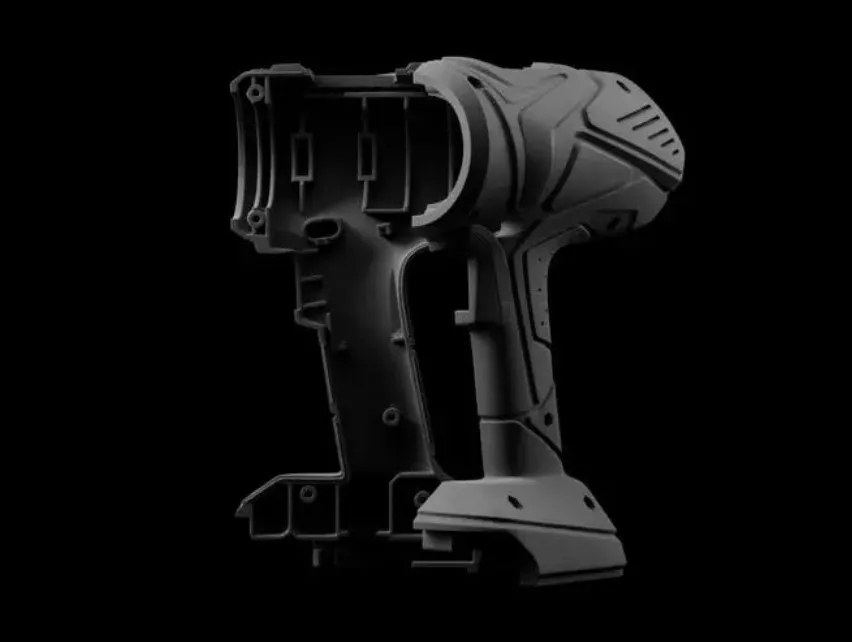
SLS Nylon parts rival injection-moulded components in tensile strength, impact resistance, and fatigue life. Suitable for end-use production, not just prototyping.
The build volume can be fully packed with multiple different parts in a single run — reducing per-part cost significantly for medium and high volume orders.
PA12 and PA11 offer excellent resistance to oils, fuels, greases, and many solvents. Parts maintain dimensional stability across a wide operating temperature range.
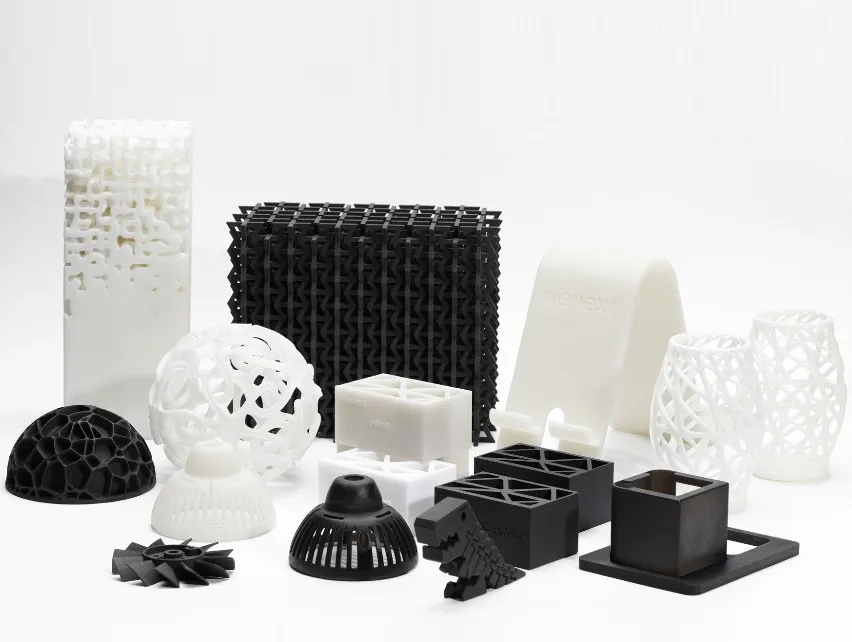
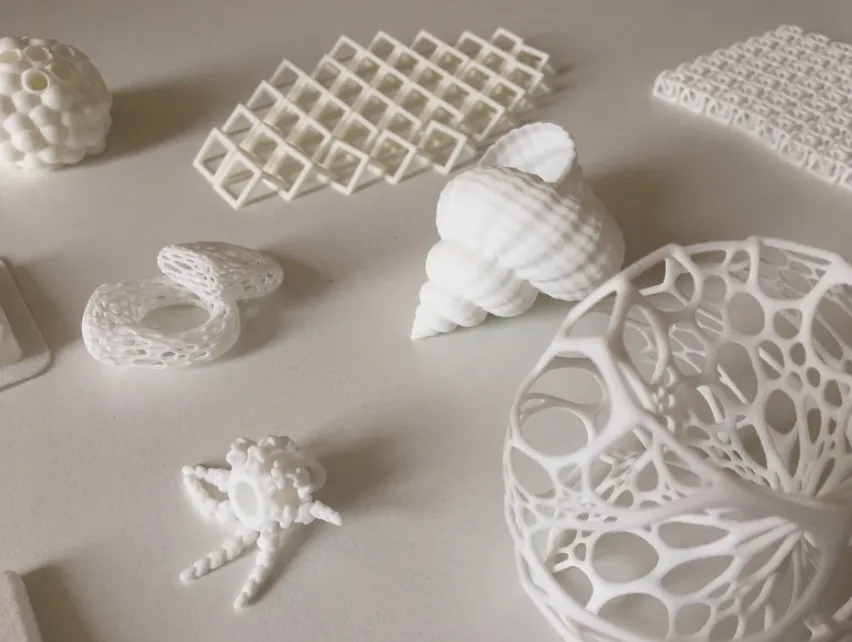
Design without compromise — interlocking assemblies, complex internal lattices, conformal cooling channels, and topology-optimised structures are all achievable in a single print.
Understand exactly where SLS outperforms other technologies to determine the right process for your application.
| Parameter | SLS (Nylon) | FFF / FDM | SLA (Resin) |
|---|---|---|---|
| Layer Resolution | 100 µm | 100 – 400 µm | 25 – 100 µm |
| Support Structures | Not Required | Required | Required |
| Strength (Isotropic) | Yes — All Axes Equal | Anisotropic (Z weak) | Moderate / Brittle |
| Surface Finish | Good (matte / granular) | Moderate (layer lines) | Excellent (smooth) |
| Material Type | PA11, PA12 Nylon | PLA, ABS, PETG, TPU… | Photopolymer Resin |
| Batch Production | Excellent (full bed nesting) | Limited | Limited |
| Dimensional Accuracy | ± 0.3 mm | ± 0.3 mm | ± 0.1 mm |
| Best Application | Functional / End-Use Parts | Rapid Prototyping | High-Detail / Medical |
| Minimum Order | 5 Units or 20 cc volume | 1 Unit | 1 Unit |
| Ideal for | Functional Parts | Low-cost Prototypes | High-detail Models |
Full technical specification of Garuda3D's SLS printing service. All values are for standard Nylon materials unless stated.
Pro Tip: SLS delivers production-grade Nylon parts with isotropic strength and no support structures. Ideal for functional prototypes, low-volume production, and complex engineering assemblies.
Enhance appearance, feel, and functionality with professional finishing options tailored for industrial and consumer-grade SLS parts.
Standard post-processing method for SLS. Removes residual powder and produces a clean, uniform matte finish with improved surface consistency.
Professional primer and paint finishing for cosmetic prototypes, display models, and customer-facing products requiring premium aesthetics.
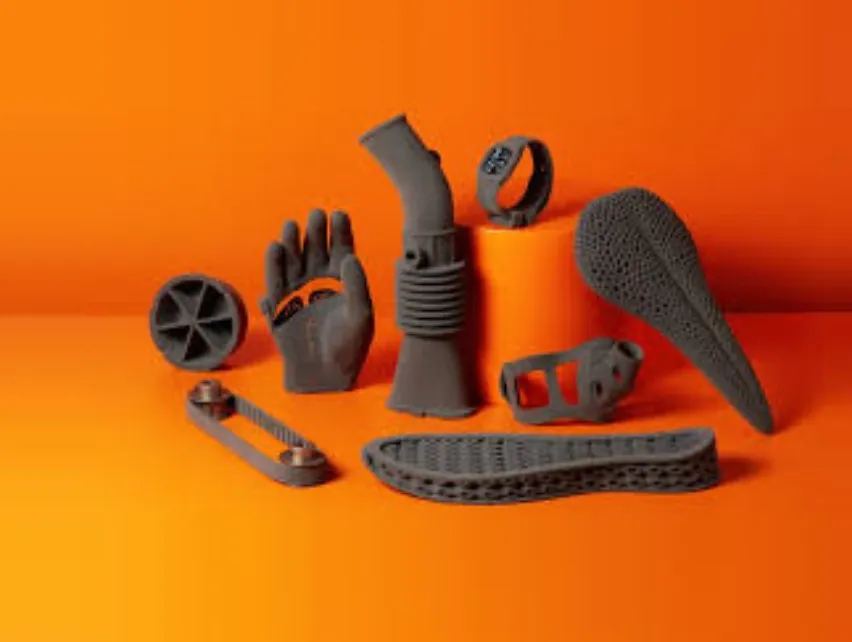
SLS is trusted across engineering, manufacturing, and medical sectors for durable, production-grade Nylon components with exceptional design flexibility.
Functional prototypes, air ducts, dashboard mounts, sensor housings, cable routing systems, lightweight brackets, and custom interior components.
Lightweight structures, cabin components, UAV housings, complex ducting systems, and topology-optimised engineering geometries.
Patient-specific devices, orthotics, prosthetic housings, medical-grade prototypes, and ergonomic surgical planning models.
Wearables, electronics housings, sports equipment, ergonomic handles, premium prototypes, and low-volume production parts.
Production tooling, robotic grippers, jigs, fixtures, conveyor components, replacement parts, and factory automation systems.
Advanced engineering research, design validation, architecture models, university R&D projects, and functional concept demonstrations.
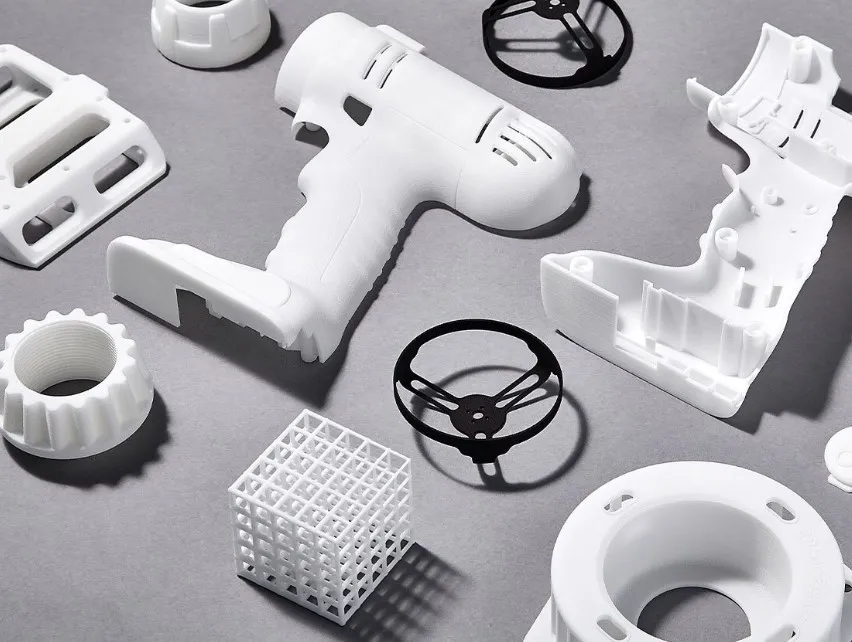
Everything you need to know about Garuda3D's Selective Laser Sintering service, materials, lead times, tolerances, and applications.
Selective Laser Sintering (SLS) is an industrial additive manufacturing process that uses a high-powered CO₂ laser to fuse Nylon powder particles layer by layer into fully solid functional parts. Unlike FFF and SLA, SLS requires no support structures because the surrounding powder supports the geometry during printing.
Garuda3D currently offers PA12 (Nylon 12) and PA11 (Nylon 11) for SLS manufacturing. PA12 is ideal for rigid functional parts, while PA11 offers higher flexibility, ductility, and impact resistance.
Our industrial SLS systems support a maximum build volume of 340 × 340 × 600 mm. Multiple smaller parts can also be nested efficiently within the same build chamber.
No. One of the biggest advantages of SLS is that no dedicated support structures are required. The unsintered powder surrounding the part naturally supports overhangs and internal features.
Typical dimensional accuracy for SLS is ±0.3 mm depending on geometry, wall thickness, orientation, and material behaviour during cooling.
SLS parts typically have a matte, slightly granular texture due to the powder-based process. Optional painting services are available for improved aesthetics and functionality.
Yes. SLS Nylon parts offer excellent strength, durability, fatigue resistance, and isotropic mechanical properties. They are widely used for production-grade components, fixtures, enclosures, ducts, and engineering assemblies.
SLS is widely adopted across automotive, aerospace, robotics, healthcare, industrial manufacturing, consumer products, and research sectors for functional and low-volume production components.
Typical lead time for SLS manufacturing is 5–10 business days depending on part size, build volume utilisation, post-processing requirements, and order quantity.
Yes. SLS excels at producing highly complex internal channels, lattices, snap-fits, interlocking mechanisms, topology-optimised structures, and moving assemblies in a single print.

