

Keerthika Technologies,
2-39/1/B, Beside DENA
Bank, Gowthami Nagar,
Chandanagar, Hyderabad,
India - 500050
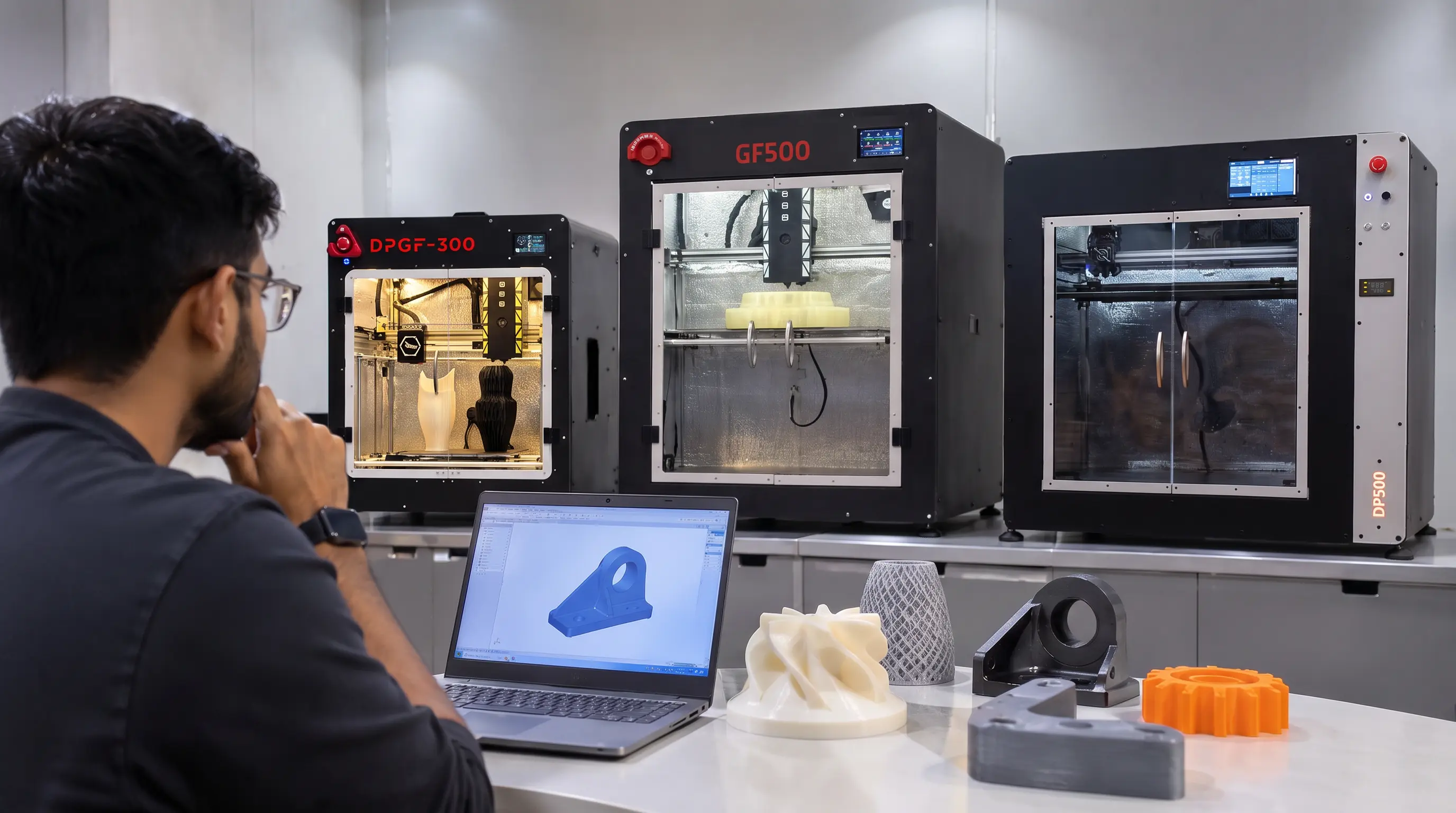
Answer four questions about your application to identify a suitable printing technology and printer. No prior knowledge of FFF, IDEX, pellet or paste printing is required.
The finder compares your requirements with the materials, part sizes and applications supported by each Garuda3D printer. Recommendations follow three principles.
The finder only suggests current Garuda3D models. If no model is suitable for your requirements, it will explain that.
Available materials depend on your application, and the finder identifies part sizes that exceed a printer's capabilities.
Unlisted applications, powder-based formulations and custom machine requirements are referred to our engineering team for review.
This overview is optional. Use it to learn more about the technologies included in your recommendation.
| Technology | How it works | Best for | Garuda3D printers |
|---|---|---|---|
| FFFFused filament fabrication | Melts plastic filament and deposits it layer by layer. | Prototypes, jigs, fixtures and functional parts. | Thunder Pro V3, Titan Pro |
| IDEXIndependent dual extruder | An FFF printer with two independently moving print heads. | Multi-material or multi-colour parts, soluble supports, and duplicate parts printed simultaneously. | DP300, DP500 |
| FGFPellet extrusion | A screw extruder melts plastic pellets directly, without first converting them into filament. | Large parts and high material throughput, with lower material cost per kilogram. | GF500, GF1000, Pellet + Filament IDEX |
| SSE — foodSemi-solid extrusion | Deposits chocolate, dough or other pastes through a temperature-controlled nozzle. | Chocolate, confectionery and shaped food products. | NEXUS Q2, NEXUS Q4, Cocoa-3D |
| BioprintingExtrusion bioprinting | Dispenses bio-inks and hydrogels from syringes to build scaffolds and tissue constructs. | Research scaffolds, tissue models and pharmaceutical research samples. | Bio ATOM, Bio MORPH, Bio PRO |
No. The recommendation is an initial guide based on the capabilities of each printer. Before purchase, a Garuda3D engineer can review your part, material and production requirements and confirm the appropriate printer and configuration.
Filament generally supports finer detail and is suitable for small and medium-sized parts. Pellets typically have a lower material cost per kilogram and higher throughput, making them suitable for larger parts, but they produce coarser layers. The finder provides a comparison when you select either material. The Pellet + Filament IDEX combines both print heads in one machine.
Select “Build a customised machine” as your objective. The finder will identify a standard printer that may serve as a starting point and direct you to a technical consultation to define the specification with our team.
Not necessarily. For occasional or low-volume requirements, using our 3D printing service may be more cost-effective than purchasing and operating a printer. The Technology Selection Guide provides information about both options.
Garuda3D printers extrude filament, pellets or pastes. If your formulation is powder-based, an engineer can assess whether it can be prepared as a printable paste or requires a different process.

