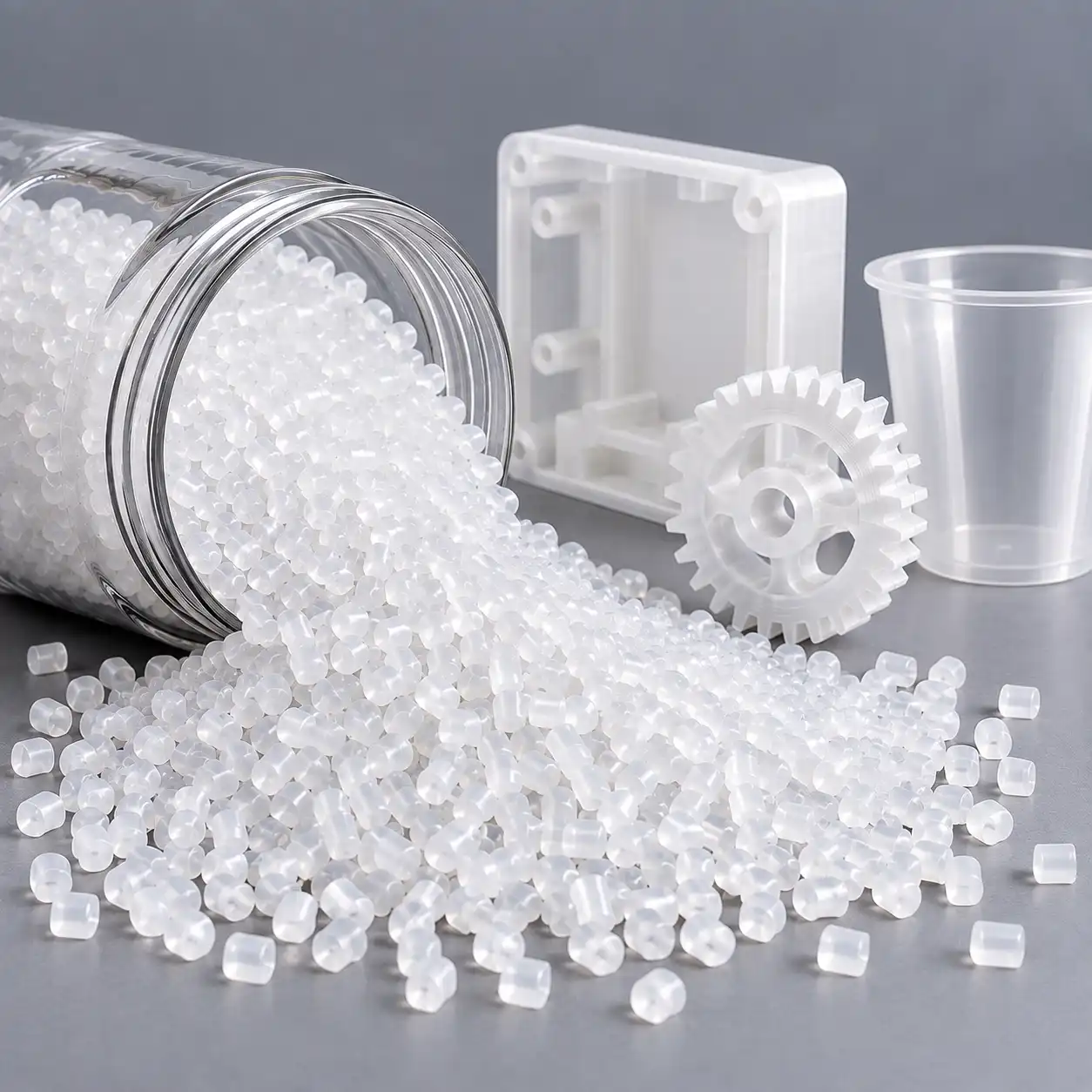
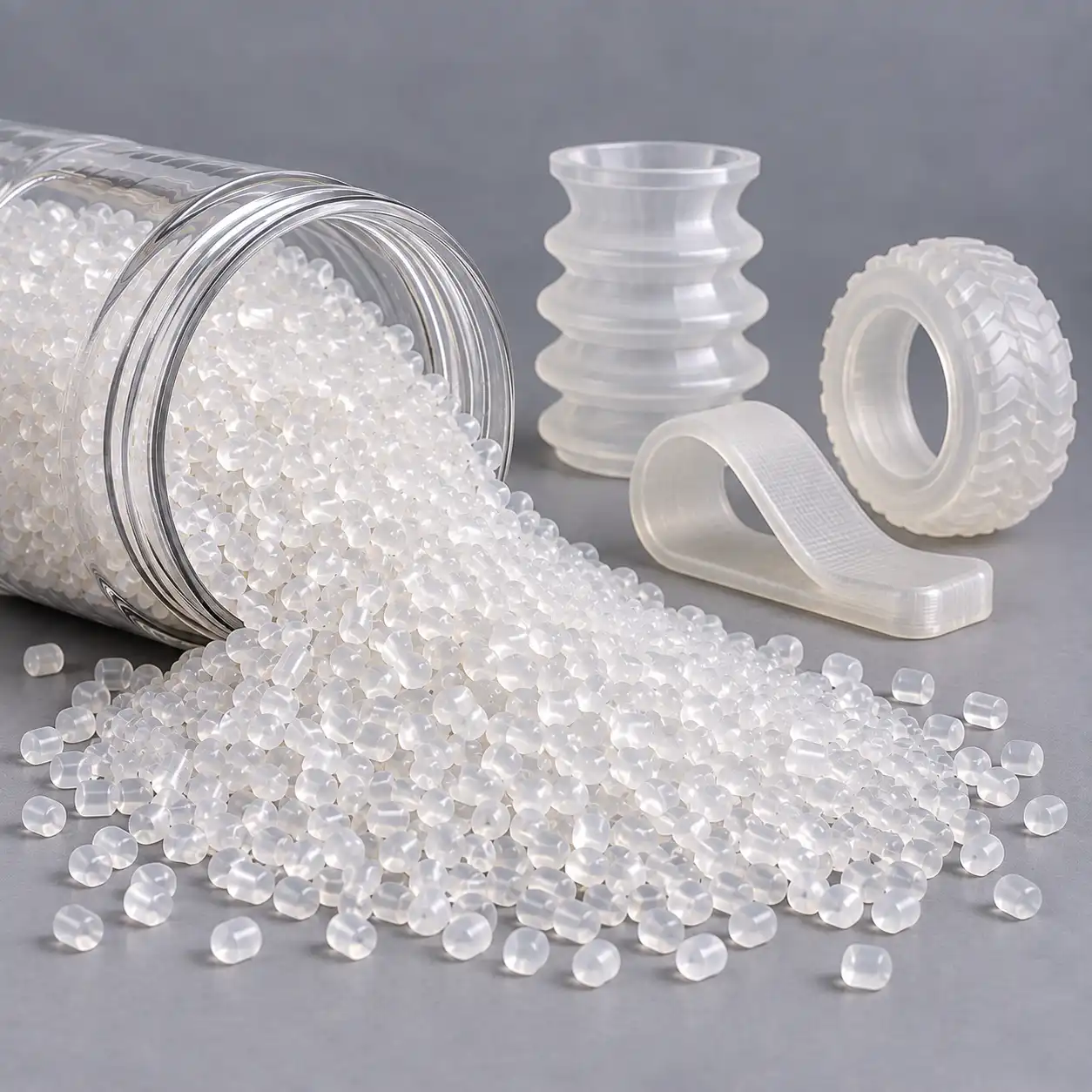
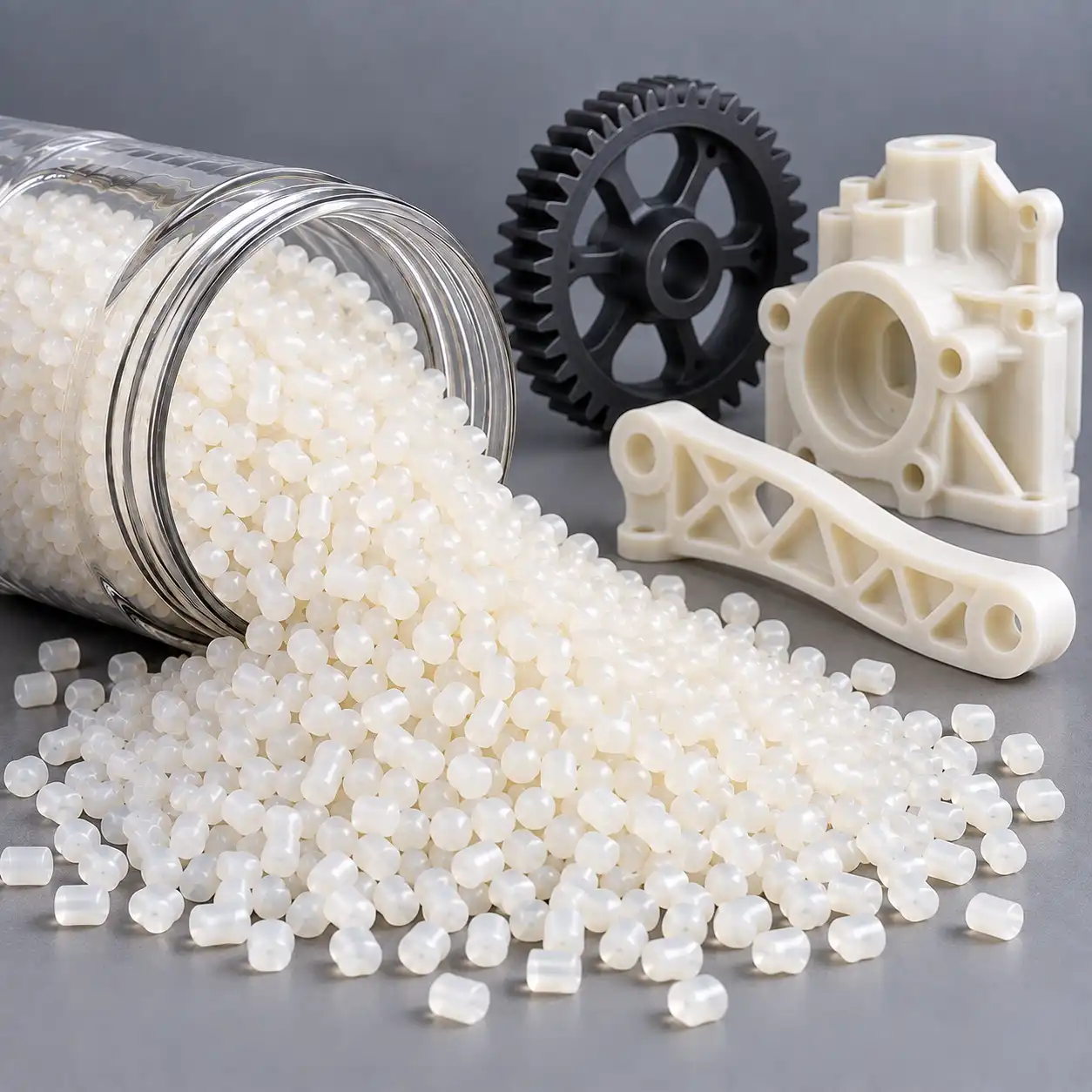
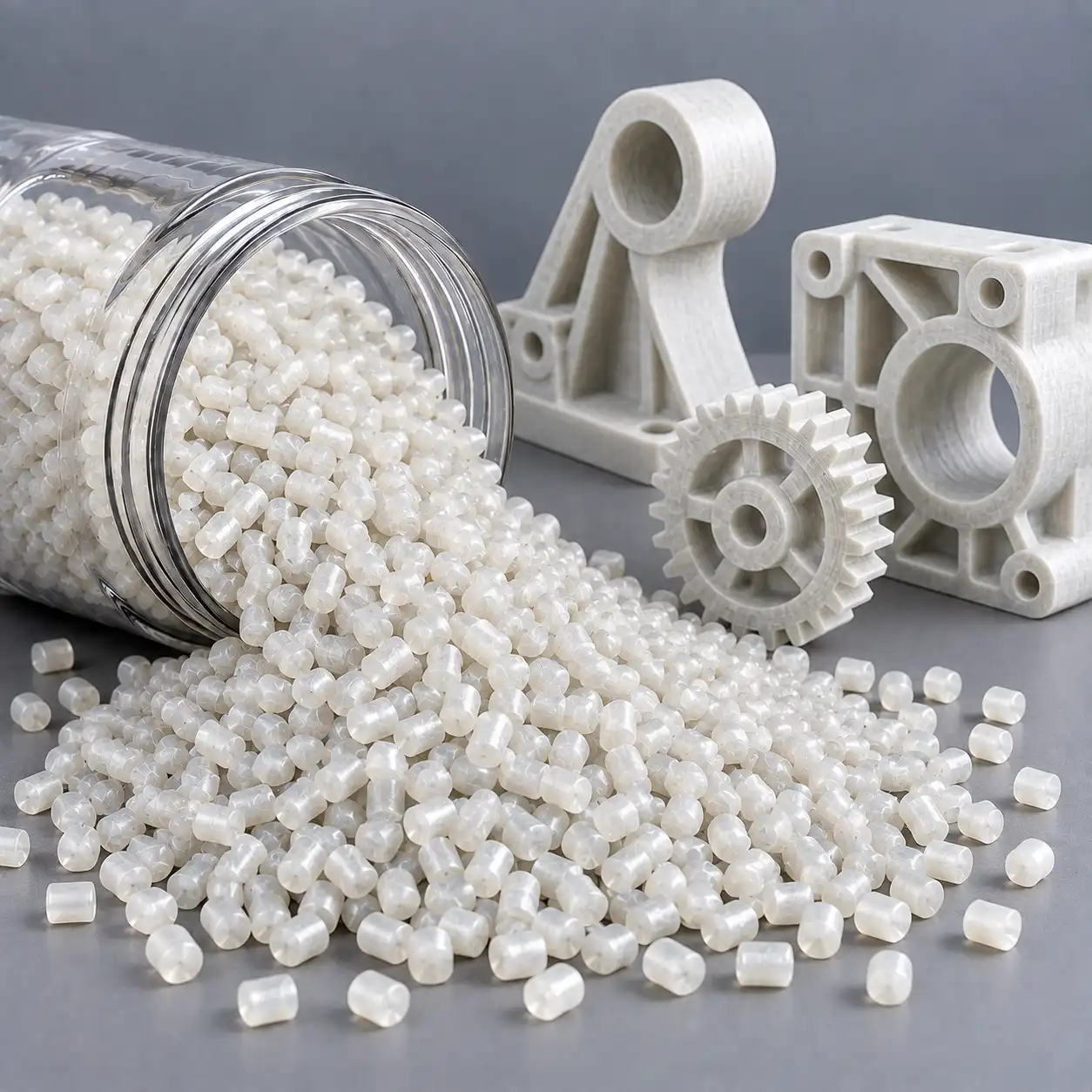
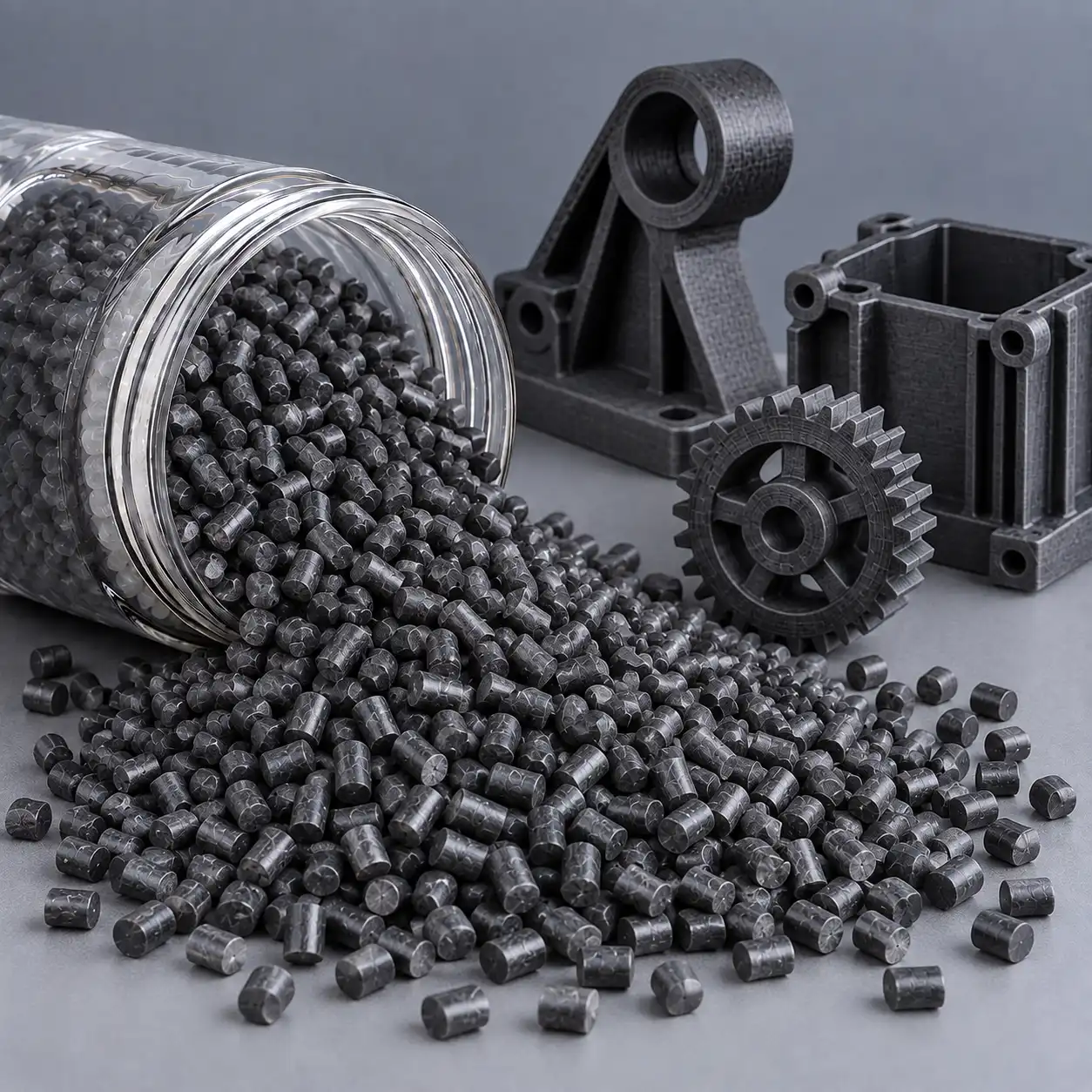
Section 01 · Commodity Pellets
Commodity Pellets
5 general-purpose thermoplastics that print straight from standard 2–4 mm injection-moulding pellets — the lowest-cost route to large prototypes, patterns and display parts.
View Pellet Service →
Pellet
Moderate Strength
Standard Temp
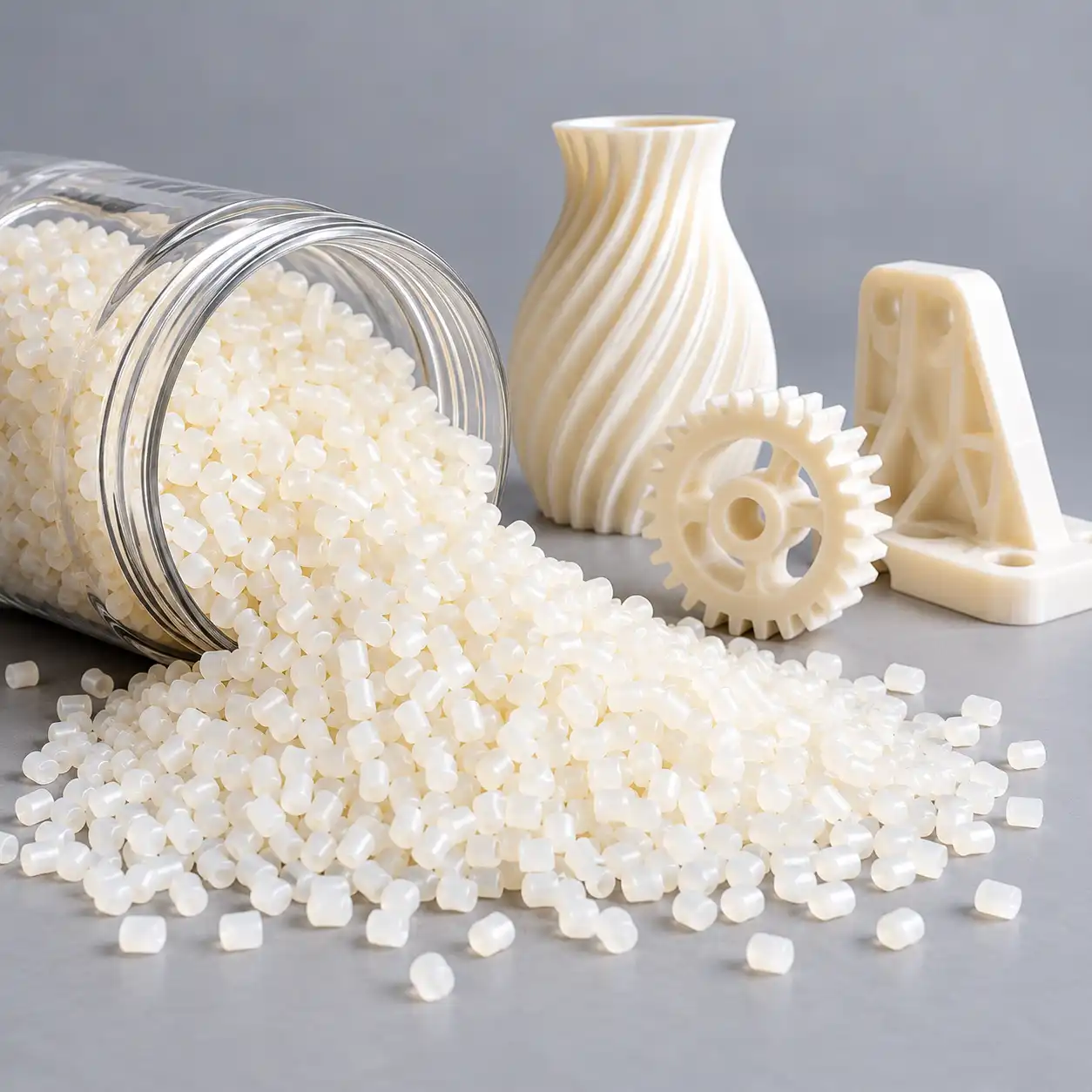
The easiest pellet to print and the natural starting point for large-format work. Bio-based (corn starch / sugarcane), low-odour and almost warp-free, PLA lets you print big display pieces, architectural models and concept parts on an open or enclosed bed with minimal tuning.
Mechanical Properties
| Tensile Strength at Yield | ~40–48 MPa |
| Tensile Modulus | ~1,350–1,600 MPa |
| Flexural Strength | ~60–70 MPa |
| Flexural Modulus | ~3,100–3,600 MPa |
| Elongation at Yield | ~4–6% |
| Notched Izod Impact (23°C) | ~2.5–3.5 kJ/m² |
| Density | ~1.22–1.26 g/cm³ |
| Typical Pellet Size | 2–4 mm |
Thermal Properties
| Melting Temperature | ~145–160°C |
| Melt Flow Rate (230°C / 2.16 kg) | ~14–18 g/10 min |
| Glass Transition Temp (Tg) | ~55–65°C |
| Heat Deflection Temp (HDT) | ~50–55°C |
| Max Continuous Service Temp | ~45–50°C |
Pellet Processing Parameters
| Nozzle / Barrel Temp | ~190–220°C |
| Bed Temperature | ~0–60°C |
| Pellet Drying | Recommended — ~4 h at 50–55°C |
| Enclosure | Not required |
| Warping Risk | Very Low |
Sustainability
Bio-based resinIndustrially compostableRegrind can be reused
Post-Processing Options
- Sanding & filler-primer for large surfaces
- Acrylic / spray painting
- Mechanical fastening and bonding of sectioned parts
Best Applications
Architectural & site modelsLarge display piecesConcept prototypesExhibition propsLow-cost design iterations
Data basis: Typical values for commercially available grades; verify against supplier-specific datasheets.
ABS
Acrylonitrile Butadiene Styrene
Pellet
High Strength
HDT ~88–96°C
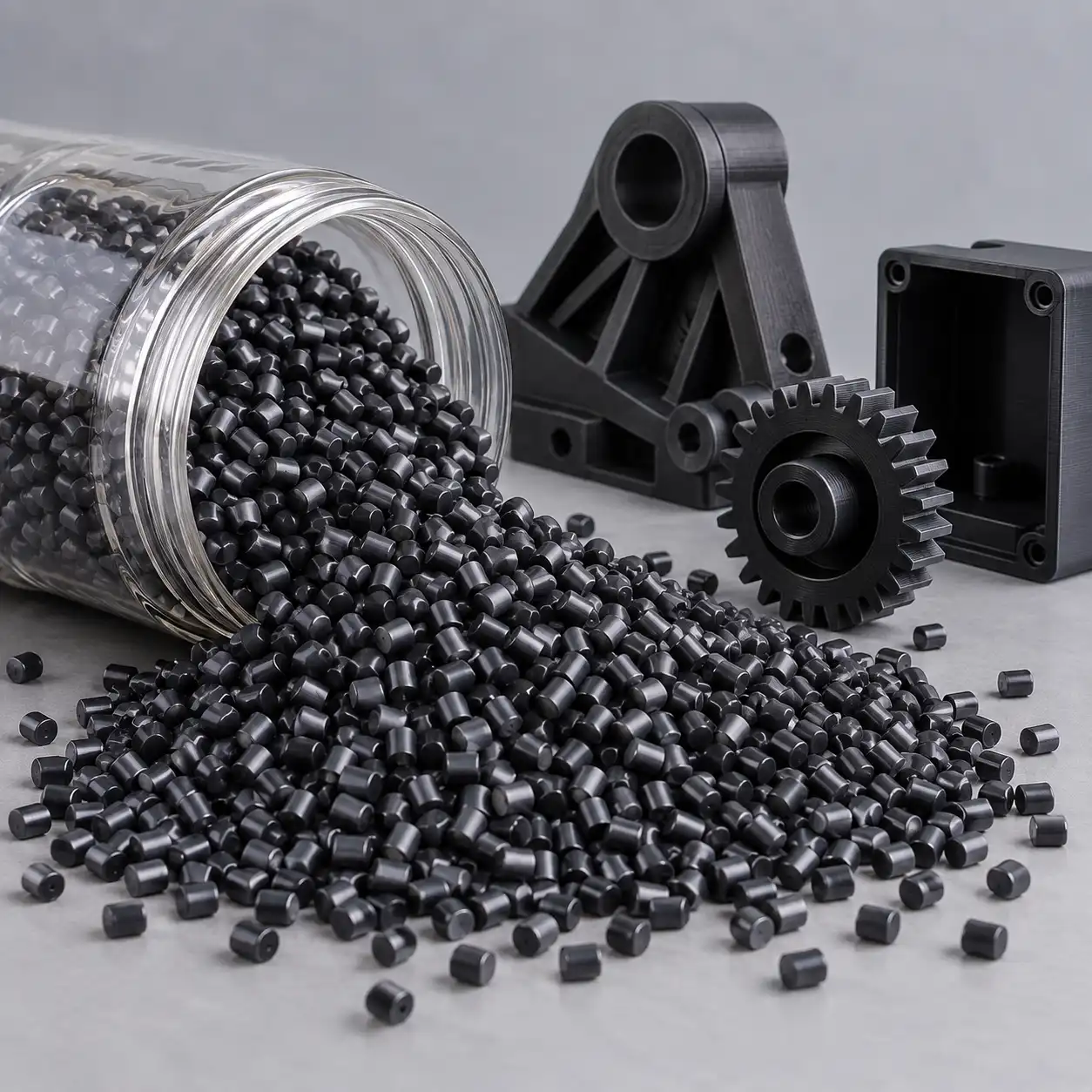
The workhorse engineering plastic of pellet printing. Tough, impact-resistant and easy to machine, ABS is the go-to for automotive jigs, foundry sand-casting patterns and industrial housings. It shrinks as it cools, so large ABS parts need the heated bed and the GF500's enclosed chamber to stay flat.
Mechanical Properties
| Tensile Strength at Yield | ~42–50 MPa |
| Tensile Modulus | ~2,200–2,600 MPa |
| Flexural Strength | ~62–72 MPa |
| Flexural Modulus | ~2,300–2,700 MPa |
| Elongation at Break | ~15–20% |
| Notched Charpy Impact (23°C) | ~15–20 kJ/m² |
| Rockwell Hardness | ~R100–R110 |
| Density | ~1.03–1.06 g/cm³ |
| Typical Pellet Size | 2–4 mm |
Thermal Properties
| Glass Transition Temp (Tg) | ~100–110°C |
| Vicat Softening Temp (VST/B/50) | ~90–98°C |
| Heat Deflection Temp (1.80 MPa, annealed) | ~88–96°C |
| Max Continuous Service Temp | ~85–90°C |
Pellet Processing Parameters
| Nozzle / Barrel Temp | ~220–250°C |
| Bed Temperature | ~90–110°C |
| Pellet Drying | Yes — ~2–4 h at ~75–85°C |
| Mould Shrinkage | ~0.3–0.6% |
| Enclosure | Required (heated chamber) |
| Warping Risk | High without enclosure |
Chemical Resistance
Acetone-soluble (smoothing)Good vs dilute acids & alkalis
Post-Processing Options
- CNC machining, drilling & tapping
- Acetone smoothing / sanding & priming
- Painting — excellent adhesion
Best Applications
Foundry sand-casting patternsAutomotive jigs & fixturesIndustrial housingsVacuum-forming mouldsInspection gauges
Data basis: Typical values for commercially available grades; verify against supplier-specific datasheets.
PETG
Polyethylene Terephthalate Glycol
Pellet
High Toughness
Moderate Temp
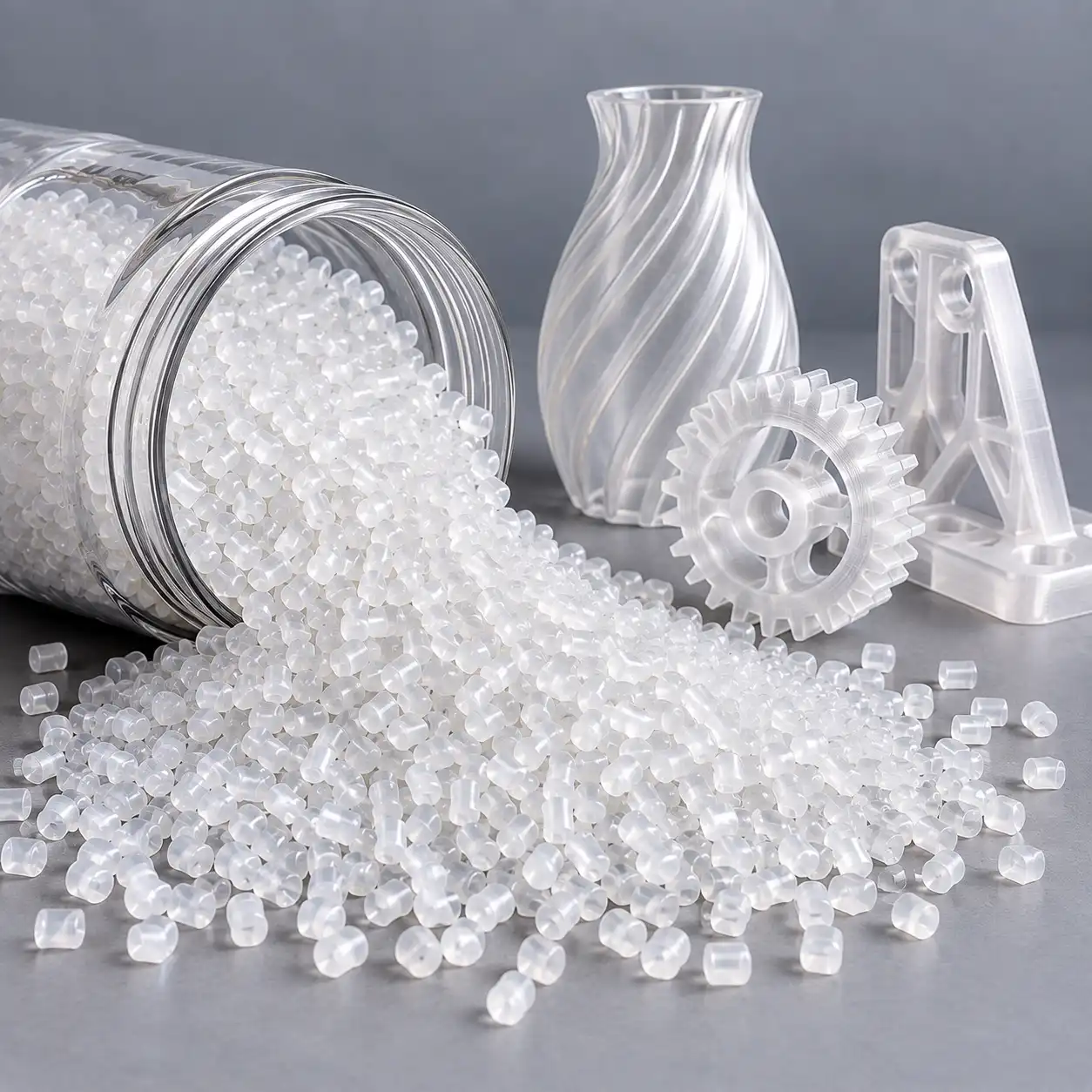
PETG combines PLA's ease of printing with far better toughness and chemical resistance, and shrinks much less than ABS — so big PETG parts stay dimensionally stable without an aggressive chamber. Natural grades print translucent, which suits large enclosures, trays and moulds you want to see into.
Mechanical Properties
| Tensile Strength at Yield | ~45–52 MPa |
| Tensile Strength at Break | ~26–32 MPa |
| Tensile Modulus | ~1,850–2,150 MPa |
| Elongation at Break | ~150–220% |
| Flexural Strength | ~62–72 MPa |
| Flexural Modulus | ~1,950–2,250 MPa |
| Notched Izod Impact (23°C) | ~8–11 kJ/m² |
| Rockwell Hardness | ~R105–R110 |
| Density | ~1.26–1.28 g/cm³ |
| Typical Pellet Size | 2–4 mm |
Thermal Properties
| Glass Transition Temp (Tg) | ~80–85°C |
| Heat Deflection Temp (0.455 MPa) | ~65–72°C |
| Heat Deflection Temp (1.82 MPa) | ~58–65°C |
| Max Continuous Service Temp | ~60–65°C |
Pellet Processing Parameters
| Nozzle / Barrel Temp | ~245–275°C |
| Bed Temperature | ~70–90°C |
| Pellet Drying | ~4–6 h at ~65–75°C (if exposed to humidity) |
| Mould Shrinkage | ~0.2–0.5% |
| Enclosure | Recommended |
| Warping Risk | Low |
Chemical & Optical
Good vs oils & greases90% light transmittance0.2% hazeLow shrinkage
Post-Processing Options
- Sanding (more effort than PLA)
- Painting with suitable primer
- CNC machining of critical faces
Best Applications
Large enclosures & traysTransparent housingsFunctional bracketsMould & tooling prototypesPackaging inserts
Data basis: Typical values for commercially available grades; verify against supplier-specific datasheets.
HIPS
High-Impact Polystyrene
Pellet
Moderate Strength
Soluble Support
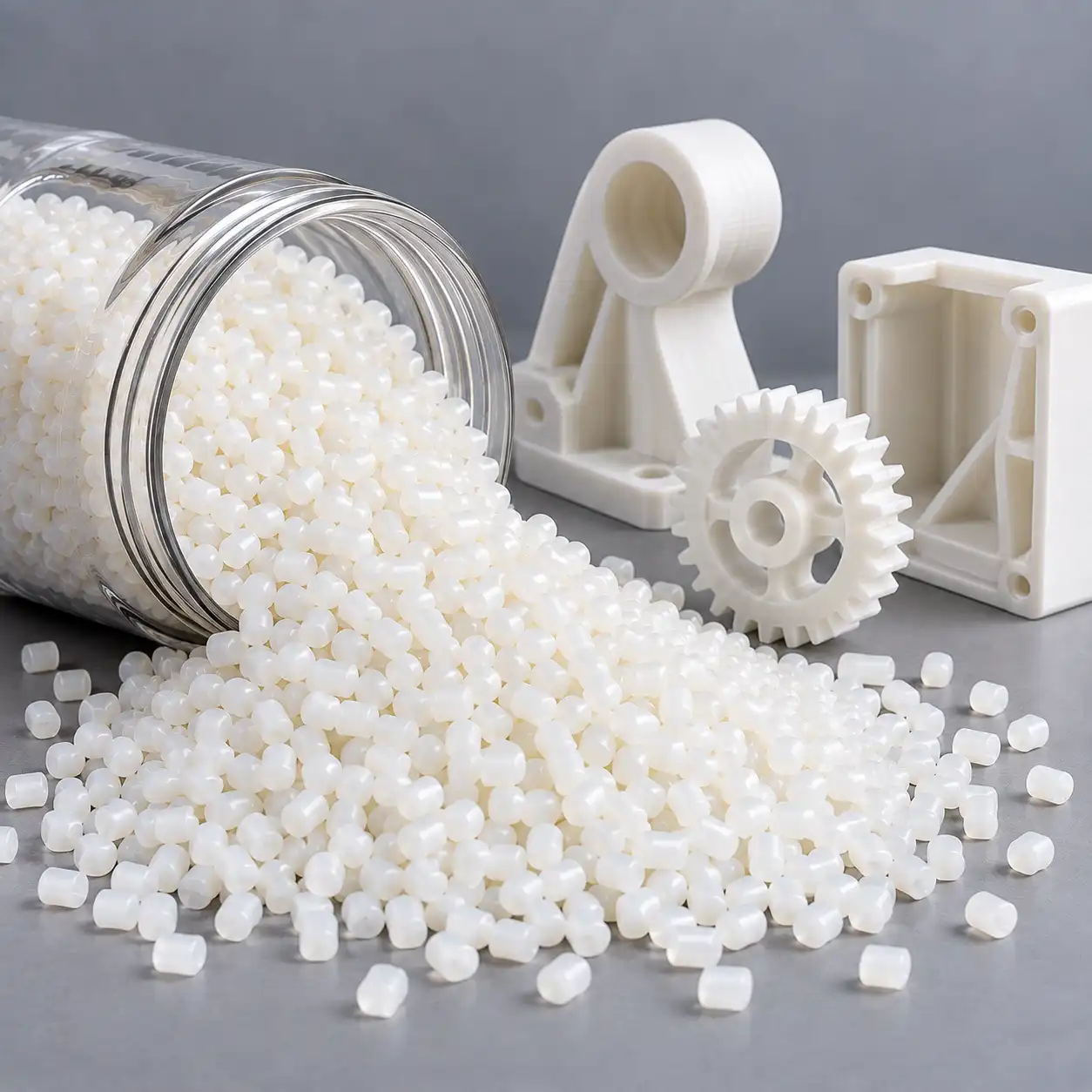
A rigid, lightweight styrenic with a smooth matte finish that sands and paints easily. HIPS prints at similar conditions to ABS and dissolves in d-limonene, so it is widely used as a soluble support or as a low-cost, easily finished material for large display and packaging forms.
Mechanical Properties
| Tensile Strength | ~20–30 MPa |
| Flexural Strength | ~35–50 MPa |
| Elongation at Break | ~30–50% |
| Impact Strength | Moderate–High |
| Density | ~1.04 g/cm³ |
| Typical Pellet Size | 2–4 mm |
Thermal Properties
| Glass Transition Temp (Tg) | ~100°C |
| Heat Deflection Temp (HDT) | ~80–90°C |
| Max Continuous Service Temp | ~75–80°C |
Pellet Processing Parameters
| Nozzle / Barrel Temp | 220–250°C |
| Bed Temperature | 90–110°C |
| Pellet Drying | Optional — ~2 h at 70°C if stored open |
| Enclosure | Recommended |
| Warping Risk | Moderate |
Solubility
Dissolves in d-limonenePairs with ABS
Post-Processing Options
- Sanding — easy, smooth matte finish
- Painting — good adhesion
- D-limonene bath to remove supports
Best Applications
Soluble support for ABSLarge display & signage formsPackaging prototypesLightweight mock-ups
Data basis: Typical values for commercially available grades; verify against supplier-specific datasheets.
GPPS
General Purpose Polystyrene
Pellet
Rigid · Brittle
Transparent
Crystal-clear, stiff and inexpensive, GPPS is the polystyrene used in display cases and packaging. It gives large pellet prints a glassy, transparent look, but it is brittle — best kept for display, lighting and packaging forms rather than parts that take impact.
Mechanical Properties
| Tensile Strength | ~40–50 MPa |
| Flexural Strength | ~70–90 MPa |
| Elongation at Break | ~2–3% |
| Impact Strength | Low (brittle) |
| Density | ~1.05 g/cm³ |
| Typical Pellet Size | 2–4 mm |
Thermal Properties
| Glass Transition Temp (Tg) | ~100°C |
| Heat Deflection Temp (HDT) | ~75–85°C |
| Max Continuous Service Temp | ~70°C |
Pellet Processing Parameters
| Nozzle / Barrel Temp | 200–240°C |
| Bed Temperature | 80–100°C |
| Pellet Drying | Optional — ~2 h at 70°C if stored open |
| Enclosure | Recommended |
| Warping Risk | Moderate |
Optical Properties
Transparent (crystal) gradeHigh surface gloss
Post-Processing Options
- Light sanding & clear-coating
- Painting with suitable primer
- Adhesive bonding of sectioned parts
Best Applications
Display & retail fixturesLighting diffusers & shadesPackaging prototypesTransparent visual models
Data basis: Typical values for commercially available grades; verify against supplier-specific datasheets.